How Buffets Keep Food Hot (and Safe): Behind the Scenes
If you’ve ever wondered how do buffets keep food hot when trays sit out for hours, you’re asking one of the best questions in food service. The answer involves real engineering — steam tables, chafing dishes, heat lamps, and strict temperature rules — plus operational discipline that separates great buffets from sketchy ones. Understanding it also makes you a smarter diner: once you know what to look for, you can judge any buffet’s food safety in about thirty seconds.
Let’s go behind the line.
The Core Equipment: Steam Tables
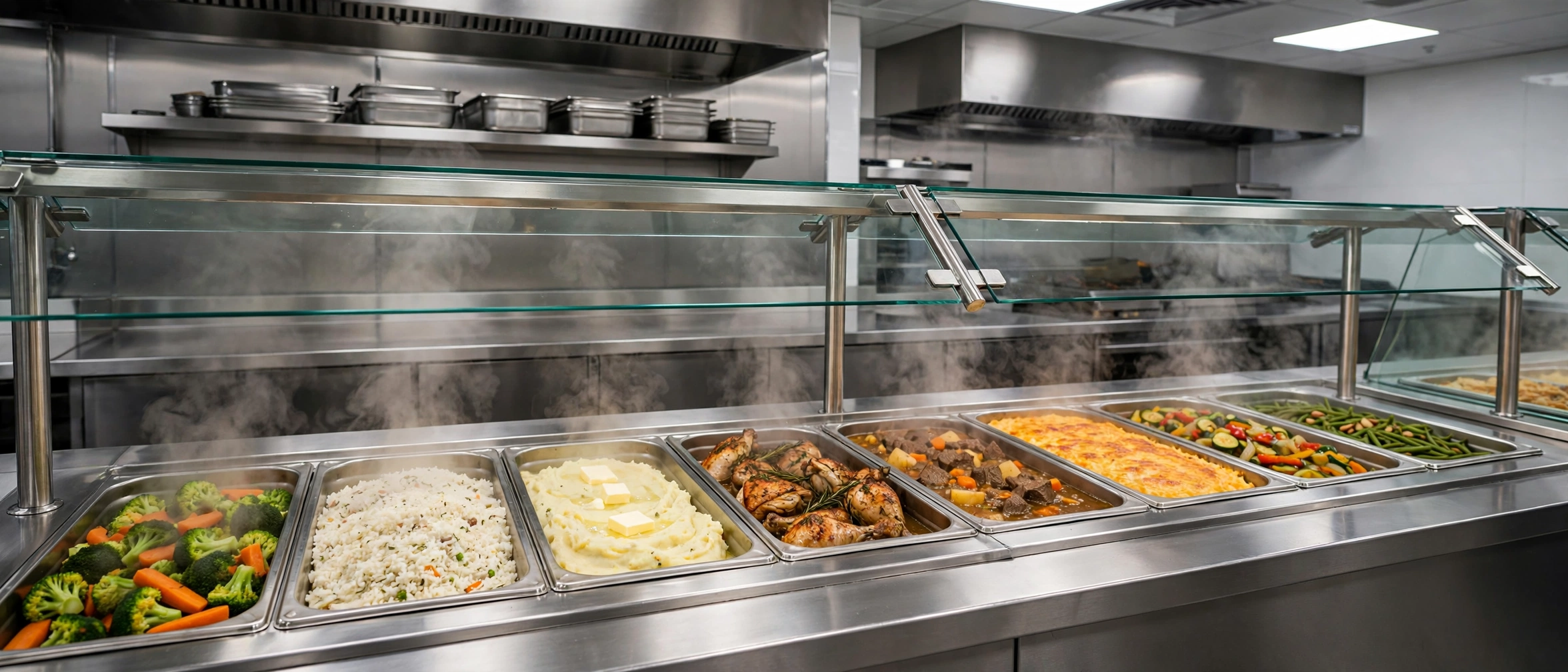
The workhorse of every buffet line is the steam table — those long, stainless-steel counters with rectangular pans sunk into them. Here’s how they work:
- Each “well” in the table holds heated water
- The water produces steam, which gently and evenly heats the food pan sitting above it
- Thermostatic controls keep the temperature steady, typically holding food above 140°F (60°C)
The key insight: steam tables don’t cook food — they hold it. Everything in those pans was fully cooked in the kitchen first, then transferred to the line. The steam table’s only job is keeping it above the temperature danger zone until you serve yourself.
Good steam tables have a few features worth knowing about:
- Sealed vs. open wells — sealed wells are more energy-efficient and hold temperature better; open wells are easier to clean
- Thermostatic controls — let staff fine-tune heat per pan, since delicate fish and hearty stew don’t want the same temperature
- Sneeze guards — those glass shields aren’t just for sneezes; they trap heat and keep the serving zone warmer
The limitation of steam tables is also their honesty: they can only maintain temperature, not fix it. Food that goes into the pan lukewarm stays lukewarm. That’s why batch discipline matters so much.
The Supporting Cast: Other Heating Methods
Steam tables handle the main line, but buffets use several other tools:
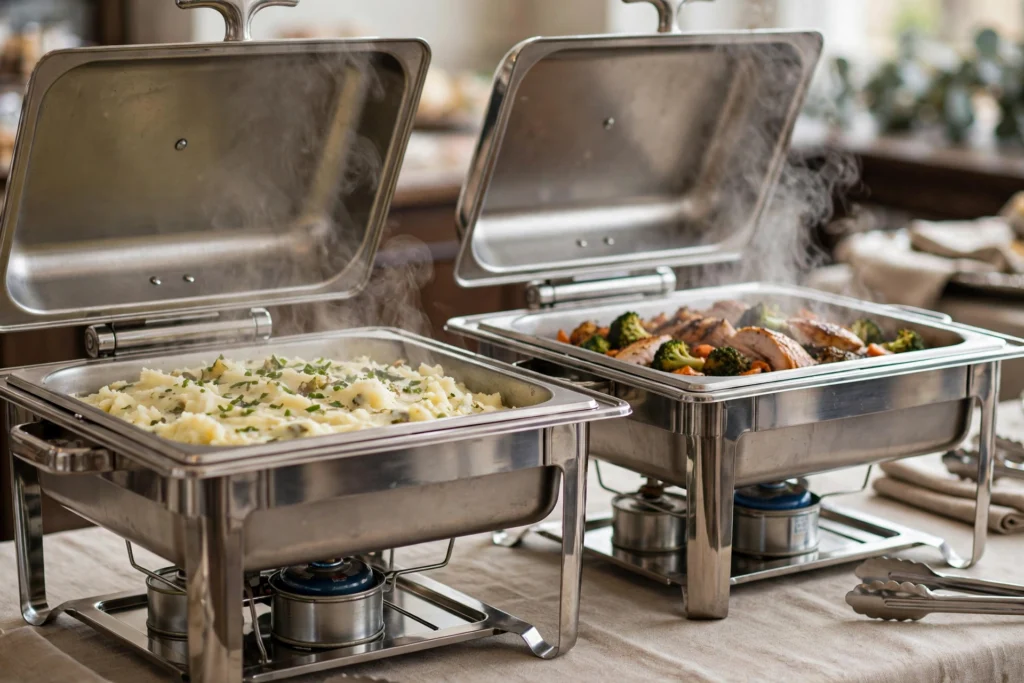
Chafing dishes
The classic catered-event setup: a metal food pan over a water pan, heated from below by canned fuel (gel or liquid burners). You’ll see these at catering events more than on permanent buffet lines, but the principle is identical — hot water, steam, steady heat above 140°F.
Heat lamps
Those red glowing lamps over carving stations and fry stations do two jobs: they keep the food’s surface hot and they make it look appetizing (warm light flatters food). They’re a supplement, not a primary heat source — the food underneath still needs a heated base.
Made-to-order stations
Hibachi grills, pho counters, and Mongolian grill stations sidestep the holding problem entirely: the food is cooked after you order it, so it’s at peak temperature and freshness by definition. This is one reason made-to-order stations are the smartest stop on any buffet line — zero holding time, maximum quality.
Warming trays and proofing cabinets
Behind the scenes, kitchens use warming cabinets to stage full pans before they hit the line, so a replenishment tray goes out hot rather than cooling down on its way from the kitchen.
The Temperature Rules That Govern Everything
All of this equipment exists to satisfy one non-negotiable rule from food safety science: keep hot food at 140°F or above, and cold food at 40°F or below. Between those temperatures lies the “danger zone” (40°F–140°F), where bacteria multiply rapidly.
The operational rules built on top of that:
- The two-hour rule: perishable food shouldn’t sit at room temperature for more than two hours. On a heated line, the clock matters less — but any tray that loses heat is on a timer.
- Small batches beat big trays: smart buffets replenish with smaller pans more often rather than loading one giant tray that sits for an hour. Fresh, frequent batches mean every serving is closer to just-cooked.
- Stir and check: staff should stir held foods (which develop hot and cold spots) and check temperatures with thermometers regularly.
- Never mix fresh into old: the correct procedure is replacing the pan, not topping off a half-empty tray with fresh food — topping off resets nothing and mixes temperatures.
How This Connects to What You See as a Diner

Here’s where the behind-the-scenes knowledge pays off. You can read a buffet line like a health inspector with these checks:
Signs the heat management is good
- Steam visibly rising from hot trays — the simplest, most reliable signal
- Full, fresh-looking pans that get swapped out while you’re watching
- Staff actively working the line — replenishing, wiping, checking
- Sneeze guards in place and the area under heat lamps actually feeling warm
- Cold items genuinely cold — salad bar items nested in ice, sushi cases refrigerated
Red flags
- Lukewarm food — if a “hot” item doesn’t feel hot, the holding has failed; skip it
- Trays sitting nearly empty for long stretches — suggests slow turnover and food sitting too long
- Dried-out or crusty surfaces — food that’s been under heat lamps too long degrades in quality even when it’s technically safe
- No staff presence on the line — active management is what makes the system work
For a fuller diner’s checklist, our guide on how to tell if buffet food is fresh expands on these signals.
Why Some Foods Hold Better Than Others
Ever notice that the fried rice is perfect but the french fries are sad? Holding physics explains it:
- Holds well: stews, braised meats, fried rice, lo mein, soups, saucy dishes — moisture protects them
- Holds okay: roasted meats (carving stations help), steamed vegetables, dumplings
- Holds poorly: anything crispy — fries, spring rolls, tempura — because steam is the enemy of crunch. The best buffets fry these in small batches constantly; the worst let them steam themselves soggy.
This is also why timing matters: arriving near opening gets you crispy items before the steam table has had its way with them.
The Home Version: What You Can Steal for Parties
Hosting a buffet-style dinner party at home? The pros’ tricks scale down:
- Use chafing dishes with canned fuel for hot items (inexpensive and effective)
- Nest cold dishes in bowls of ice
- Serve in smaller batches and refill — don’t put everything out at once
- Keep track of time: two hours at room temperature is the limit for perishables
- Keep hot foods in a 200–250°F oven until serving time, then transfer
The Bottom Line
Buffets keep food hot through a system — steam tables for the line, chafing dishes for events, heat lamps for stations, and made-to-order cooking where it counts — all governed by the 140°F rule and disciplined batch replenishment. The equipment is only half the story; the other half is staff actively managing it. Now that you know what the system looks like when it’s working, you’ll spot instantly when it isn’t — and you’ll know to eat elsewhere.
Frequently Asked Questions
How do buffets keep food hot for hours? Primarily with steam tables — heated water underneath food pans produces steam that holds cooked food above 140°F. Chafing dishes, heat lamps, and warming cabinets support the system, and staff replenish in small fresh batches.
What temperature should buffet hot food be held at? At or above 140°F (60°C), per food safety guidelines. Cold foods must be held at or below 40°F (4°C). Food between those temperatures is in the “danger zone” where bacteria multiply.
Is it safe to eat food that’s been sitting on a buffet line? Yes, when the buffet manages heat properly — steaming trays, active replenishment, staff presence. Skip items that look or feel lukewarm, trays that have sat nearly empty, or lines with no staff attention.
Why does buffet fried food get soggy? Steam tables keep food moist, which is the enemy of crispiness. Crispy items degrade fastest under holding heat — another reason to arrive early and hit made-to-order stations.