
Golden Apple Buffet Salad Bar Guide: How to Build the Perfect Plate
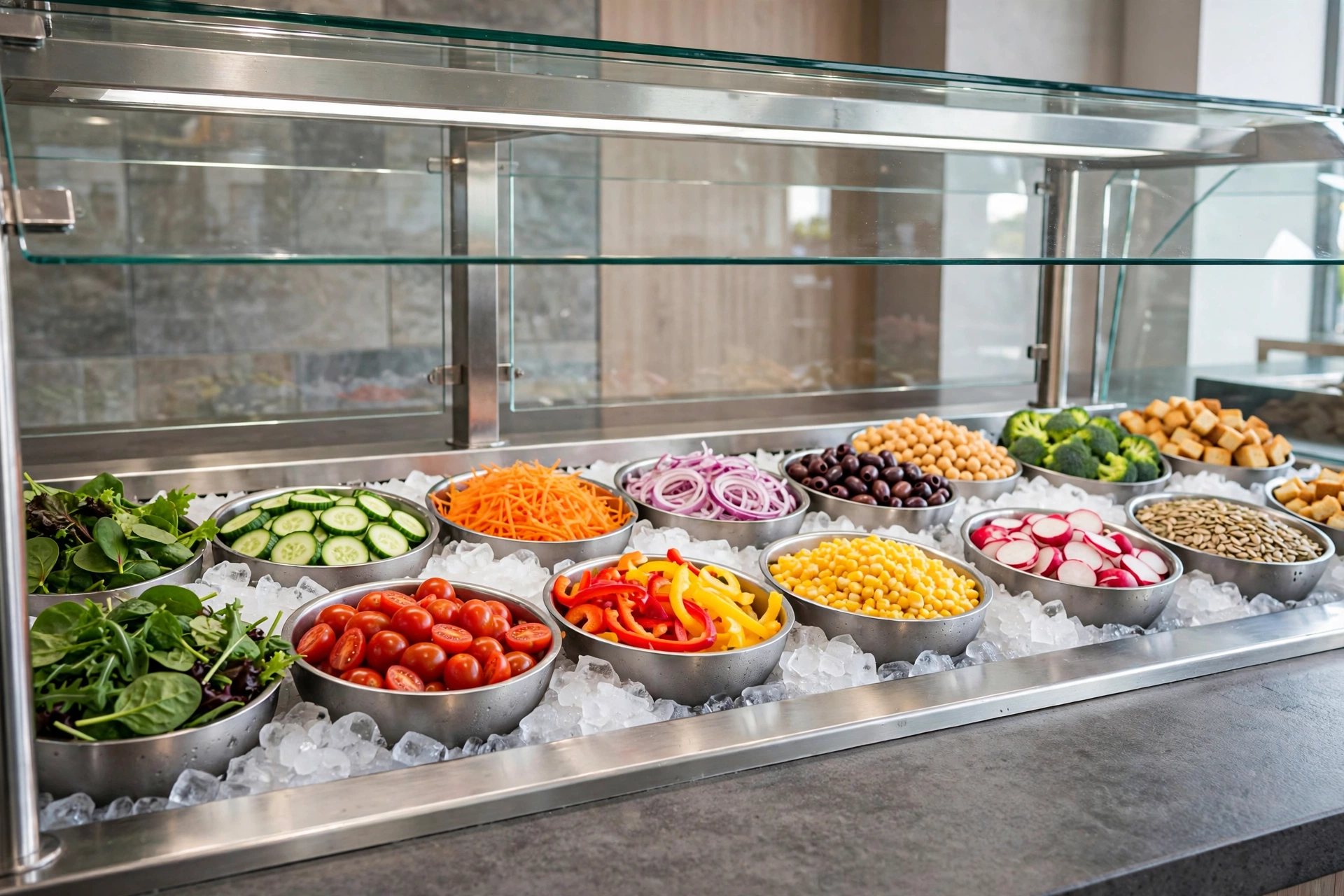
Most people treat the salad bar as a sad obligation — a little lettuce before the “real” food. That’s a mistake, and it’s costing you. With the right buffet salad bar tips, the salad bar at Golden Apple Buffet can be the best plate of your entire visit: fresher than the steam table, fully customized, and — built correctly — genuinely satisfying as a meal.
This guide covers the layering strategy the pros use, the combinations that actually taste great, dressing rules that won’t drown your work, and how to turn a side salad into a full meal without leaving hungry.
Why the Salad Bar Deserves More Respect
Three reasons smart buffet diners hit the salad bar first:
- It’s the freshest station. Nothing on the salad bar has been sitting under a heat lamp. Crisp, cold, raw — it’s the quality peak of the line. (It’s also your first stop in any money’s-worth strategy.)
- It’s fully customizable. Dietary restrictions? Picky preferences? The salad bar is the one station where you control every ingredient — handy if you’re navigating the line with dietary needs.
- It sets up the rest of your meal. Starting with fiber and volume means you eat the expensive proteins next with better judgment instead of loading up on starches first.
The Layering Strategy: Build Bottom-Up
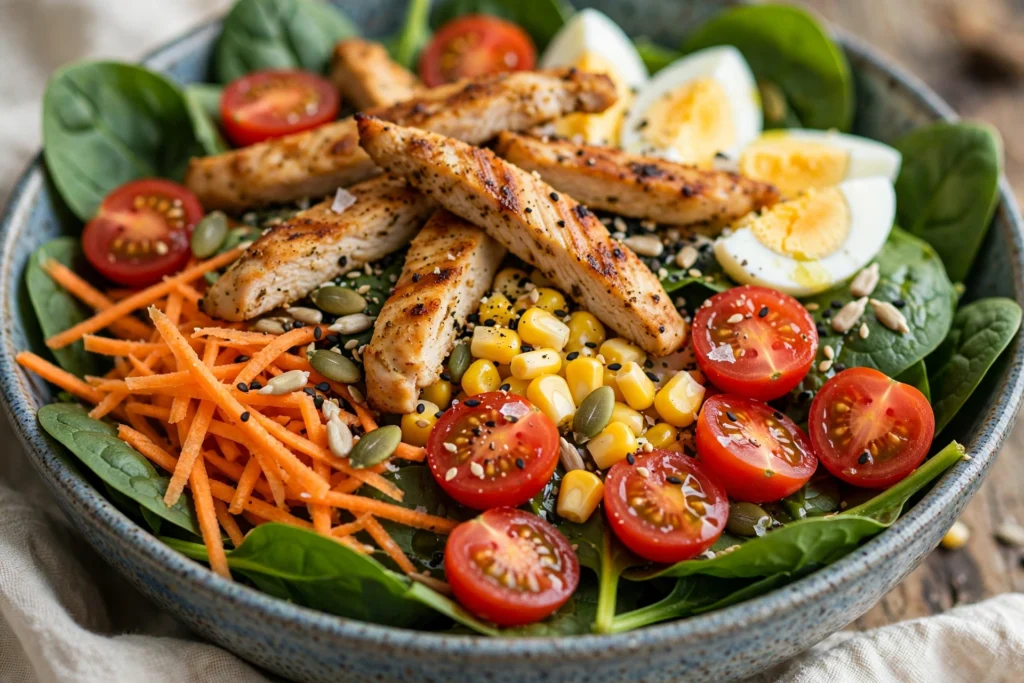
The single biggest salad-bar skill is layering order. Build in the wrong sequence and you get a soggy, collapsed mess. Build in the right sequence and every bite works.
Step 1: The base (greens)
Start with your greens — and choose deliberately. Darker greens (spinach, spring mix) pack more nutrients than iceberg, but iceberg has the crunch and the nostalgia. There’s no wrong answer; many veterans do a 50/50 mix. Don’t overfill here — greens are the foundation, not the whole building. And keep them dry: wet greens are the #1 salad killer.
Step 2: The heavy, wet ingredients (bottom layer)
This is the step everyone skips. Put your heaviest, wettest ingredients directly on the greens, at the bottom: beans, corn, peas, diced tomatoes, cucumbers, shredded carrots. They anchor the salad and their moisture stays underneath instead of wilting everything.
Step 3: Proteins
Now the substance: chopped hard-boiled eggs, grilled chicken strips (check the hot line too — you can add warm proteins to a cold salad), chickpeas, shredded cheese, tofu if available. Protein is what turns a side salad into a meal — be generous here.
Step 4: Crunch and flavor (top layer)
Finish with the dry, crunchy, flavorful stuff on top where it stays crisp: croutons, bacon bits, sunflower seeds, nuts, crispy wonton strips, shredded cheese (yes, cheese works top or middle). These are texture — they go last so they don’t get soggy.
Step 5: Dressing — on the side, always
Get dressing on the side and apply it yourself, a little at a time. Pre-dressed salad-bar salads wilt within minutes. Dip your fork in the dressing, then spear the salad — the classic trick that gives you full flavor with a fraction of the dressing.
The Best Combinations to Try
Move beyond “lettuce plus whatever.” These combos are designed around the sweet-salty-crunchy-creamy contrasts that make salads craveable:
The Classic Cobb-ish Romaine + chopped egg + chicken + bacon bits + tomato + blue cheese dressing on the side. The buffet Cobb — all the hits, none of the $16 restaurant price.
The Asian Crunch Spring mix + shredded carrots + cucumbers + crispy wonton strips + sesame-ginger dressing (or mix soy sauce with a little oil from the condiment area). Add grilled chicken from the hot line for a full meal.
The Southwest Romaine + corn + black beans + diced tomato + shredded cheese + ranch or a squeeze of lime. If there’s salsa at the condiment station, a spoonful transforms it.
The Mediterranean Spinach + cucumber + tomato + olives + feta-style cheese + chickpeas + olive oil and vinegar. Simple, fresh, and genuinely healthy.
The Kitchen Sink (full meal) Everything above that fits: greens, three vegetables, two proteins, cheese, seeds, and dressing on the side. This is a legitimate 600+ calorie balanced meal — and it cost you nothing extra.
Dressing Rules
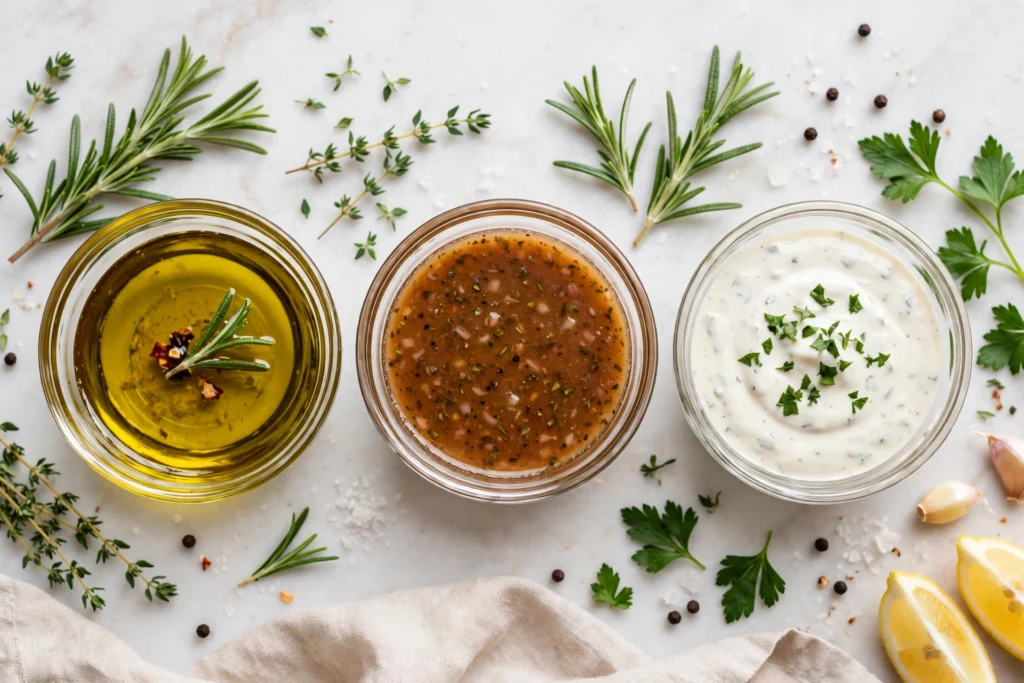
- On the side, always. Non-negotiable.
- Start with half what you think you need. You can add; you can’t subtract.
- Oil and vinegar beats creamy if you’re watching richness — and a squeeze of lemon brightens everything.
- Taste before committing. If there are multiple dressings, put a dab of each on the plate edge and pick your winner.
Turning the Salad Bar Into a Full Meal
For this to satisfy as a meal rather than a starter, you need three things: enough protein, enough fat, and enough volume. Most failed “salad as a meal” attempts are just too small and too lean.
- Protein target: at least two protein sources (egg + chicken, or beans + cheese, or chickpeas + tofu)
- Healthy fats: cheese, nuts, seeds, olives, or avocado if available — fat is what keeps you full
- Volume: build it tall. A sad flat salad isn’t a meal; a heaping, layered bowl is
- The warm-protein hack: grab grilled chicken, shrimp, or sliced beef from the hot line and add it to your cold salad. Warm protein on cold greens is one of the best bites in the entire restaurant
Pair it with a cup of soup (hot-and-sour or egg drop) and a piece of fruit, and you’ve had a complete, balanced buffet meal — likely the healthiest possible version of the visit.
Salad Bar Etiquette (Don’t Be That Person)
- Use the provided tongs and spoons — one utensil per item, and never with your hands
- Don’t pick through — take from the top/front; don’t dig for the “best” pieces
- One trip, well planned — survey the whole bar before you start building so you don’t have to go back six times
- Keep it clean — drips and spills on the sneeze guard area are the staff’s problem to fix, but not making the mess is yours
Our buffet etiquette guide covers the full code of conduct if you want the complete picture.
The Bottom Line
The salad bar isn’t the opening act — it’s a headliner if you build it right. Layer bottom-up (wet and heavy first, crunch last), double up on protein, keep dressing on the side, and don’t be afraid to raid the hot line for warm additions. Do that, and the “boring” salad plate becomes the one you think about on the drive home.
Frequently Asked Questions
How do you build a good salad at a buffet salad bar? Layer strategically: greens first, then heavy/wet ingredients (beans, tomatoes, cucumbers), then proteins, then crunchy toppings last. Keep dressing on the side and add it gradually.
Can the salad bar be a full meal at a buffet? Yes — if you include at least two protein sources, healthy fats (cheese, nuts, olives), and enough volume. Adding warm protein from the hot line (grilled chicken, shrimp) makes it genuinely satisfying.
What are the healthiest salad bar choices? Dark leafy greens, colorful raw vegetables, beans and chickpeas, eggs, and olive-oil-based dressings. Go easy on croutons, bacon bits, and heavy creamy dressings if health is the goal.
Should you get salad dressing on the side at a buffet? Always. Pre-dressed salads wilt quickly, and you use far less dressing when you control it yourself. The fork-dip method gives full flavor with a fraction of the calories.


