How to Eat Healthy at a Buffet (2026): 15 Tips That Actually Work
A buffet and healthy eating sound like opposites, but they do not have to be. Knowing how to eat healthy at a buffet is simply a strategy game: survey the options, build your plate deliberately, and use the buffet’s biggest strength — total choice — in your favor. Below are 15 practical tips, organized by when they matter: before you arrive, at the buffet line, and while you eat.
Before You Arrive
1. Eat a light snack first
Arriving starving is the fastest way to blow your plan. A small, protein- and fiber-rich snack — an apple with peanut butter, a handful of nuts, a hard-boiled egg — takes the edge off hunger so you make calm choices instead of loading up on the first thing you see.
2. Drink water before and during the meal
Mild dehydration feels a lot like hunger. Drink a full glass of water before you leave home, and keep water — not soda or sweet tea — as your drink at the table. It is also the zero-cost, zero-calorie choice: buffet beverage markups are steep, as our money’s-worth guide explains.
3. Set your intention in advance
Decide before you walk in: this will be a balanced meal, not a free-for-all. Sounds simple, but people who set a clear intention eat noticeably better at buffets than those who “play it by ear.”
At the Buffet Line
4. Survey the whole spread before taking a plate
Walk the entire line first. This is the single most effective buffet habit, healthy or not. When you can see everything, you choose what you actually want — you do not fill up on average dishes early and regret them later.
5. Use the plate method: half vegetables, quarter protein, quarter starch
Borrowed from dietitian playbooks, the plate method gives unlimited-choice buffets a structure:
- Half the plate: vegetables, salad, and fruit
- Quarter of the plate: lean protein (grilled chicken, baked fish, beans, eggs)
- Quarter of the plate: one starch (a small roll, a scoop of rice, a few roasted potatoes)
Repeat this ratio on every plate and your meal stays balanced no matter how many rounds you take.
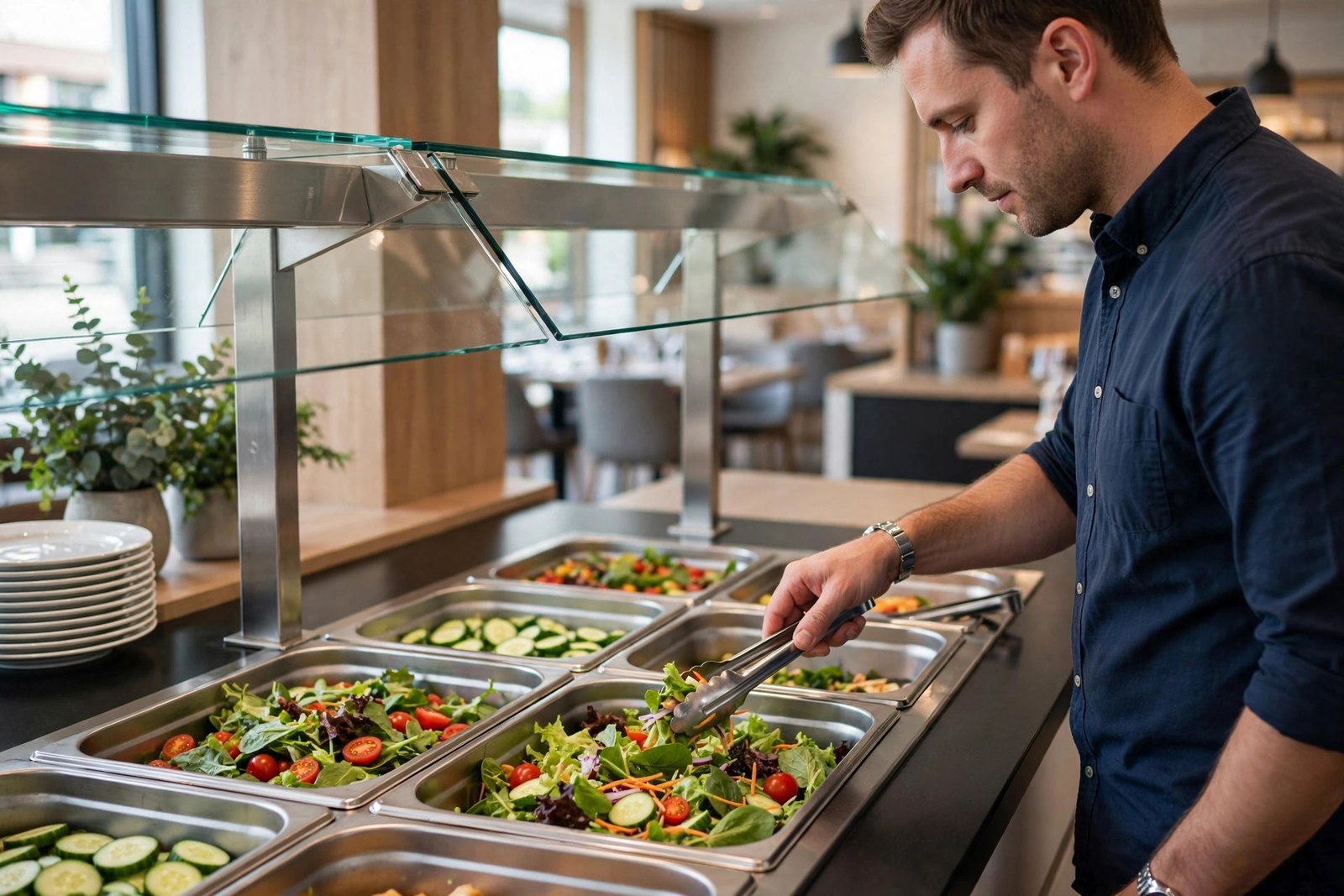
6. Start with salad and vegetables
Front-load your first plate with salad-bar items: leafy greens, cucumbers, tomatoes, beans, and other vegetables. High-fiber foods take physical space and slow you down, so by the time you reach the hot stations you are naturally less ravenous.
7. Choose grilled, steamed, baked, or broiled over fried
This is the highest-leverage swap at any buffet. Grilled chicken, steamed fish, baked potatoes, and broth-based soups give you more nutrition per calorie than their fried or creamy counterparts. Fried foods are filling, greasy, and make you feel sluggish — exactly what you do not want from a meal.
8. Favor lean proteins
Grilled or roasted chicken breast, turkey, fish, shrimp, and eggs are the stars. Be selective with processed meats (sausage, bacon) and battered items, which add sodium and fat fast.
9. Watch the sauce and dressing situation
Sauces can double a dish’s calories without you noticing. Spoon them lightly, ask for them on the side at made-to-order stations, and go easy on creamy salad dressings — a vinegar or lemon-based dressing (or just a squeeze of citrus) keeps the salad genuinely light.
10. Use the small plate
Grab the salad plate instead of the dinner plate for your first round. Smaller plates mean smaller portions without feeling deprived — and at a buffet, you can always take a second trip.
While You Eat
11. Eat slowly and check your fullness
Put your fork down between bites, talk with your companions, and honestly rate your fullness halfway through (aim to finish around “satisfied,” not “stuffed”). Buffet grazing disables your body’s normal pacing — slow eating re-enables it.
12. Treat one indulgence as a tasting, not a portion
Want the mac and cheese or the prime rib? Have a small taste-sized portion and truly enjoy it. One small portion of something delicious beats three bland ones — and it keeps the meal enjoyable rather than guilt-laden.
13. Share dessert or choose fruit
Buffet dessert bars are designed to tempt. You have two strong options: split a dessert with your dining partners, or finish with fresh fruit (melon, berries, pineapple) — often the sweetest thing on the line anyway. If fruit feels like a compromise, one small dessert is fine; just skip the second.
14. Do not camp at the table — walk away when done
Once your plate is finished and you are satisfied, leave the table for a bit — a bathroom trip, a walk, a conversation away from the food. Lingering at the table invites grazing. This works especially well with kids; see our dietary options and kids guide for family-specific tips.
15. Remember: it is one meal, not a diet verdict
One balanced buffet meal will not define your health. Aim for better, not perfect. Even applying half of these tips makes your visit dramatically lighter than the average free-for-all — and you will feel the difference on the drive home.
The Healthiest Stations at Most Buffets (Quick Reference)
| Station | Smart picks | Watch out for |
|---|---|---|
| Salad bar | Greens, beans, veggies, boiled eggs | Creamy dressings, cheese piles, bacon bits |
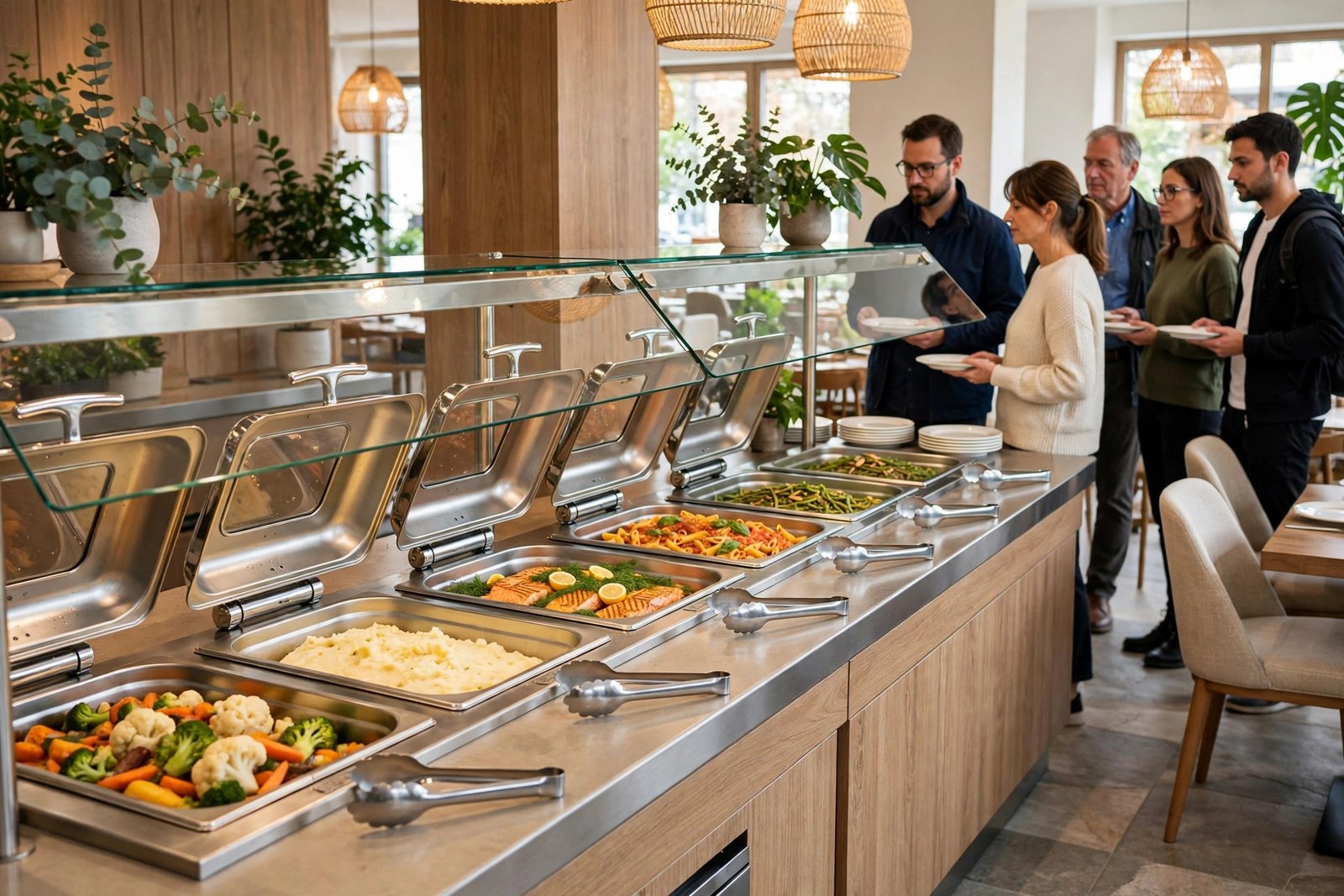
| Hot line | Grilled chicken, steamed fish, veggie sides | Fried anything, creamy casseroles |
| Soup | Broth-based soups, miso, minestrone | Cream-based chowders |
| Carving | Lean slices of roast turkey or beef | Fatty cuts, heavy gravy |
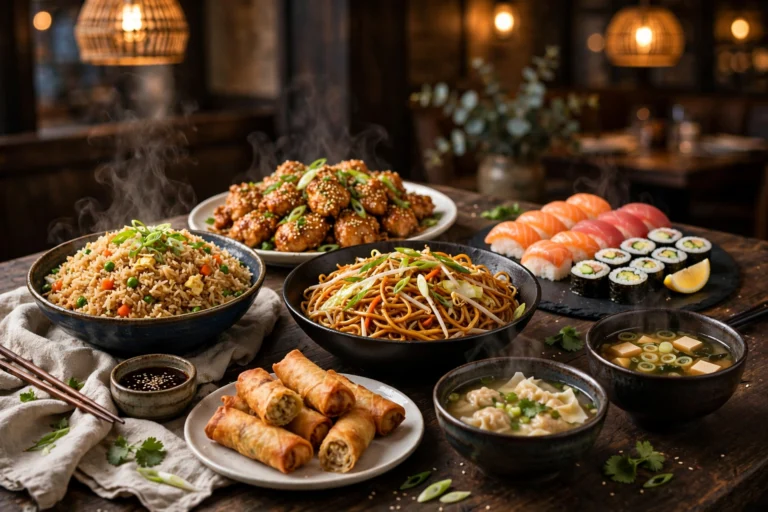
| Asian station | Steamed dumplings, stir-fried veg | Egg rolls, deep-fried dishes |
| Dessert | Fresh fruit, sorbet | Cakes, pastries, ice cream sundaes |
Frequently Asked Questions
Q: Can you really eat healthy at a buffet?
A: Yes — a buffet actually gives you more control than a fixed menu, since you choose portions and combinations yourself. The plate method (half vegetables, quarter lean protein, quarter starch) plus slow eating makes a balanced meal entirely doable.
Q: What is the healthiest thing to eat at a buffet?
A: Start with the salad bar: leafy greens, raw vegetables, beans, and a light dressing. Then add grilled or steamed protein and one modest starch. Broth-based soups are another strong, filling choice.
Q: How do I avoid overeating at an all-you-can-eat buffet?
A: Four things: eat a small snack before arriving, survey the whole line before plating, use the plate method with smaller plates, and check your fullness halfway through. Drinking water with the meal helps too.
Q: Is buffet food unhealthy in general?
A: It depends entirely on your choices. Buffets offer both healthy and indulgent options side by side. The trap is that unlimited access encourages volume eating — the 15 tips above neutralize that by giving you a deliberate plan.
The Bottom Line
Learning how to eat healthy at a buffet comes down to three habits: arrive with a plan, build each plate by the plate method, and eat slowly enough to hear your body’s “satisfied” signal. You will leave comfortable instead of overstuffed — and still have enjoyed the meal.
Ready to put the plan into practice? Our buffet etiquette rules keep your visit smooth, and if you are curious where the healthiest spreads hide, check what happens to leftover buffet food — freshness standards matter for healthy eating too.