

Buffet Breakfast Guide: What to Eat (and What to Skip)
A breakfast buffet is one of the best values in dining — eggs, bacon, waffles, fruit, coffee, all for one price. But it is also a minefield of soggy hash browns, rubbery eggs, and regrettable second plates. These buffet breakfast tips will help you eat like a strategist: the right dishes in the right order, the traps to avoid, and the timing that gets you the freshest food on the line.
Walk the Line Before You Pick Up a Plate
The single biggest mistake buffet diners make is loading a plate within 60 seconds of arriving. Every serious buffet strategist does a full lap first. You are scouting for three things:
- The high-value stations — is there an omelet bar? Smoked salmon? A waffle iron? These cook-to-order items are fresher and better than anything sitting in a steam tray.
- The tray turnover — which pans look freshly refilled (steaming, glossy, full) and which look tired (dried edges, crusty tops)?
- The hidden gems — good buffets often tuck premium items at the end of the line. Knowing the full layout prevents regret on plate three.
This scouting lap takes two minutes and changes the whole meal. As we cover in our guide to the best time to go to a buffet, timing and planning matter more than appetite.
Eat in the Right Order: Protein First, Carbs Last
Breakfast buffets front-load you with temptation: pastries, muffins, pancakes. Resist. The winning order is:
Plate one — hot protein. Eggs (ideally from the omelet station), bacon or sausage, and a modest portion of potatoes. Protein fills you up, stabilizes your energy, and costs the buffet the most — this is where your money’s worth lives. Our buffet value guide covers this protein-first logic in detail.
Plate two — the fun stuff. Now go back for the waffle, the French toast, the smoked salmon on a bagel. You will enjoy these more when you’re already partially satisfied, and you’ll take smarter portions.
Plate three — fruit and finishers. Fresh fruit, yogurt, a small pastry, coffee. Ending on something light beats collapsing under a mountain of syrup.
This order also solves the classic buffet regret: blowing your whole appetite on a plate of hash browns and dry scrambled eggs before discovering the waffle station.
The Omelet Bar Is Your Best Friend
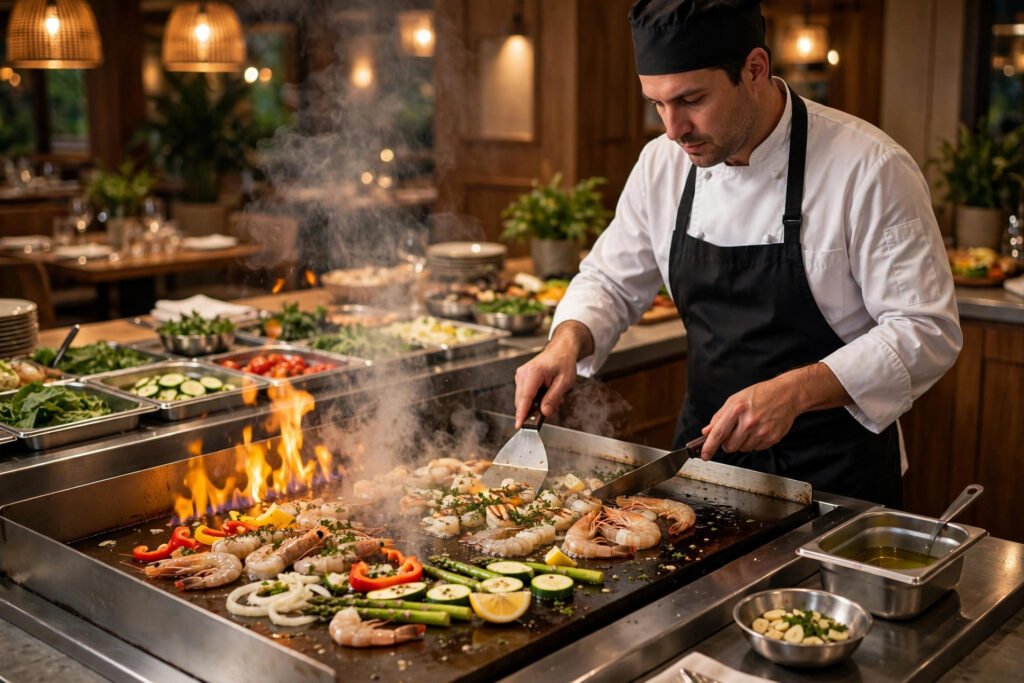
If the buffet has a made-to-order omelet or egg station, use it every time. Here’s why:
- Freshness guaranteed. It’s cooked seconds before you eat it — no steam-tray staleness.
- Customizable. Load it with vegetables, cheese, mushrooms, spinach. It’s the easiest way to build a genuinely nutritious plate.
- Real eggs. Buffet steam-tray “scrambled eggs” are sometimes made from liquid egg mix or powder. The omelet station uses cracked eggs you can watch.
One practical note: the line moves faster than you think, and the cook appreciates diners who know their order. Have your fillings picked before you get to the front. A plate with two eggs, spinach, peppers, and cheese is a complete, satisfying meal — and for a lighter approach, check our healthy eating at a buffet guide.
What to Eat at a Breakfast Buffet
Not everything on the line deserves your attention. Here’s how the typical spread stacks up:
Always worth your plate
- Omelets and fried/poached eggs — fresh, high-protein, made to order where possible
- Smoked salmon — expensive elsewhere, often excellent at better buffets
- Bacon and sausage — classics that survive the steam tray well
- Fresh fruit — melon, berries, pineapple; natural sweetness, light finish
- Oatmeal or grits — underrated; warm, filling, and a good base before indulgence
Worth it if fresh
- Waffles and pancakes — great from an iron station, mediocre from a tray
- French toast — same rule; soggy tray versions are a pass
- Biscuits and gravy — regional treasure, but skip if the gravy looks separated
Usually a pass
- Steam-tray scrambled eggs — often rubbery or powdered; choose the omelet bar instead
- Dry cereal dispensers — you can eat cornflakes at home for pennies
- Canned fruit cocktail — sugary and stale compared to fresh fruit
- Limp hash browns — only grab them if they’re crispy and the tray was just refilled
- Packaged pastries — mass-produced muffins and danishes rarely beat a bakery
Timing: When to Arrive for the Freshest Breakfast
For breakfast buffets, earlier is almost always better:
- First 30–45 minutes after opening — everything is fresh, trays are full, staff is attentive. This is the sweet spot.
- Mid-service — decent, but trays start showing wear. Watch for refills and pounce on fresh batches.
- Last 30 minutes before the line closes — the line may be thinner, but food has been sitting longest. Only go late if you’re prioritizing a discount over quality.
Weekend breakfast buffets at popular spots can develop long lines by 9:30 AM, so arriving right at opening gets you both freshness and calm. Hotels with included breakfasts are busiest between 8:00 and 9:30.
Drinks: Keep It Simple
Coffee and tea are your best breakfast-buffet beverages — hot, cheap for the house, and unlimited in spirit. Water with lemon is the other smart move. Sugary juices from the dispenser fill you up fast and spike your energy into a crash; if you love orange juice, have a small glass with your final plate, not your first. And skip the bottomless mimosa add-on unless you’re genuinely celebrating — it’s the biggest markup on the menu, typically around $10–$20 extra, varies by location.
Common Breakfast Buffet Mistakes
- Overloading plate one. The buffet isn’t going anywhere. Small plates, multiple trips — you eat better and waste less.
- Ignoring fruit until the end… then skipping it. Fruit is the best value on the health axis; build it into the plan deliberately.
- Filling up on bread products. Bagels, toast, muffins, biscuits — they’re the cheapest items for the buffet and the fastest way to feel stuffed.
- Forgetting hygiene. Wash hands before the line, use the serving utensils (never your fingers), and take a fresh plate for each trip. This is buffet etiquette that keeps everyone safe.
- Skipping the survey lap. Already covered, but it bears repeating: two minutes of reconnaissance, every time.
FAQ
What should I eat first at a breakfast buffet?
Start with hot protein — eggs from the omelet station, bacon or sausage — plus a small portion of potatoes. Save waffles, pancakes, pastries, and fruit for later plates. Protein first keeps you satisfied and gets you the best value.
Is a breakfast buffet worth the price?
Often, yes. Breakfast buffets typically run around $12–$25 per person (varies by location — call to confirm), which beats ordering eggs, meat, fruit, and coffee separately at a restaurant. The value is best for hearty eaters and when the buffet includes cook-to-order items like an omelet bar.
How do I avoid overeating at a breakfast buffet?
Use smaller plates, take the scouting lap first, lead with protein, and pause between plates. Drink water or coffee throughout. Decide your dessert/finishing plan (fruit? one pastry?) before you start, not when you’re already full.
What’s the best time to go to a breakfast buffet?
Arrive within the first 30–45 minutes after opening for the freshest food and shortest lines. Weekend crowds peak around 8:30–9:30 AM, so earlier is calmer as well as fresher.


