Are Buffets Dying? The Honest State of All-You-Can-Eat in 2026
Ask “are buffets dying” and you’ll get two completely opposite answers depending on who you ask. The doomsayers point to shuttered locations and the Vegas Strip, where fewer than 20 buffets remain across the valley and the cheap all-you-can-eat spreads of the 1990s are long gone. The optimists point to Yelp’s 2026 Food & Drink Trend Report, which found searches for “all you can eat buffet near me” surged 252% year over year.
Both are true. That’s what makes this question interesting — and the real answer is more useful than either extreme. Here’s the honest state of all-you-can-eat dining in 2026: what’s killing weak buffets, what’s fueling the comeback, and what it means for your favorite local spot.
The Case That Buffets Are Dying
Let’s steelman the pessimists first, because the pressures are real.
The Vegas canary
Las Vegas was the spiritual home of the American buffet, and its decline there is stark. Where the Strip once had affordable all-you-can-eat spreads at nearly every casino, only a handful remain — and they’ve bifurcated into luxury spreads pushing $100+ or budget options around $30, with the middle hollowed out. Iconic rooms like the Carnival World Buffet at the Rio have closed; others, like ARIA’s, were converted into food halls. When the format can’t survive in the city built on excess, that’s a genuine warning sign.
Chain closures continue
2026 has seen continued closures among legacy buffet chains. Golden Corral — the largest national buffet franchise, founded in 1973 — has continued closing restaurants this year, including locations that served communities for decades. For families who relied on those spots for affordable meals, each closure is felt personally.
The structural pressures are brutal
Several forces are squeezing buffet operators simultaneously:
- Food costs have risen sharply, and buffets — which sell unlimited food at a fixed price — feel inflation more acutely than any other format
- Labor costs for the large staffs buffets require (line cooks, sushi chefs, bussers cycling constantly) keep climbing
- Delivery apps trained a generation to expect restaurant food at home, undercutting the “night out” occasion
- Changing tastes — younger diners often prefer fast-casual, food halls, and “curated” experiences over the traditional steam-table spread
None of these are going away. Any honest assessment has to acknowledge that the old model of the buffet — the cavernous room with lukewarm trays competing purely on price — is in serious trouble.
The Case That Buffets Are Thriving
Now the other side — because the comeback data is just as real.
Demand is surging, not fading
That Yelp figure deserves emphasis: a 252% year-over-year increase in searches for “all you can eat buffet near me” (comparing September 2024–August 2025 to the prior year) is not a rounding error. It signals genuine, growing consumer intent. FOX News and national outlets have covered the trend: as Americans experience menu-price fatigue everywhere else, the flat-price buffet starts to look like, in one wealth manager’s memorable phrase, “financial genius.” When eggs cost five dollars and burgers cost twenty, unlimited food for one fixed price is a compelling proposition.
Asian cuisine is driving the revival
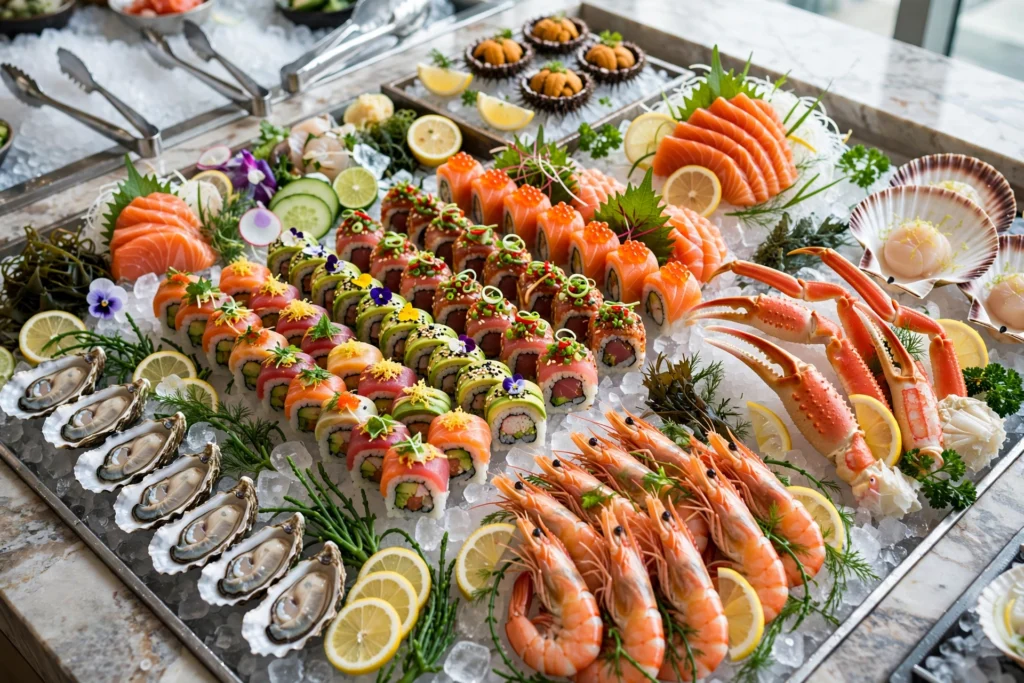
According to Yelp’s analysis, much of the buffet revival is powered by Asian food: searches for all-you-can-eat dim sum rose 244%, “sushi bars all you can eat” jumped 93%, and interest in unlimited Korean BBQ and hot pot skyrocketed. This matters because it reveals what kind of buffet is thriving: not the generic steam-table room, but formats with freshness, interactivity, and perceived quality. The modern winners — Korean BBQ, hot pot, upscale sushi spreads — are buffets in format but a different species in experience.
The value proposition is structural
Here’s the deep point the trend-chasers miss: buffets solve a problem that isn’t going away. Families with picky eaters, groups with mixed dietary needs, budget-conscious diners who want variety — for all of them, the buffet’s core offer (one price, total choice, no surprises) is genuinely hard to replicate. Food halls come close but cost more per person. Fast-casual is cheaper but narrower. The buffet occupies a real niche, and niches with real demand don’t die; they evolve.
What’s Actually Happening: A Split, Not a Death
The honest synthesis: buffets aren’t dying — they’re bifurcating. The middle is collapsing while the top and the specialists thrive.
What’s dying:
- Tired, undifferentiated buffets competing only on low prices they can no longer sustain
- The Vegas-style loss-leader buffet (cheap food to keep you near the slot machines)
- Buffets that let quality slip — lukewarm trays and dirty dining rooms in the age of phone-camera reviews
What’s thriving:
- Specialty buffets with a clear identity: Korean BBQ, hot pot, sushi-forward spreads, regional Chinese
- Value-positioned family buffets that execute well — clean, fresh, and fairly priced
- Premium/experience buffets that turned the meal into an event worth paying for
The pattern is familiar from every restaurant shakeout: the undifferentiated middle dies, and operators with a real proposition survive. “All-you-can-eat” isn’t the proposition anymore — it’s the format. The proposition has to be something else: exceptional freshness, a cuisine done right, unbeatable family value, or a genuine experience.
What This Means for Buffet Lovers
If you love buffets, the 2026 landscape is actually good news with a caveat:
The good news: the buffets that survive this shakeout will be better than the ones that died. The economics now punish mediocrity — you can’t coast on cheap trays anymore — so the remaining operators are the ones executing well. A well-run buffet in 2026, with fresh trays, made-to-order stations, and fair pricing, is a better meal than the average buffet of 2016.
The caveat: there will be fewer of them, and the rock-bottom prices are gone. The $9.99 buffet isn’t coming back; food costs won’t allow it. What you’re getting instead is a fair price for a genuinely good meal — which, if you eat strategically, remains one of the best dining values available.
How to Spot a Buffet That Will Survive
Whether you’re choosing where to eat or just curious about your local spot’s prospects, the survivors share traits:
- Visible freshness — full, steaming trays; high turnover; staff actively replenishing. (See how to tell if buffet food is fresh.)
- A clear identity — great at something specific, not mediocre at everything
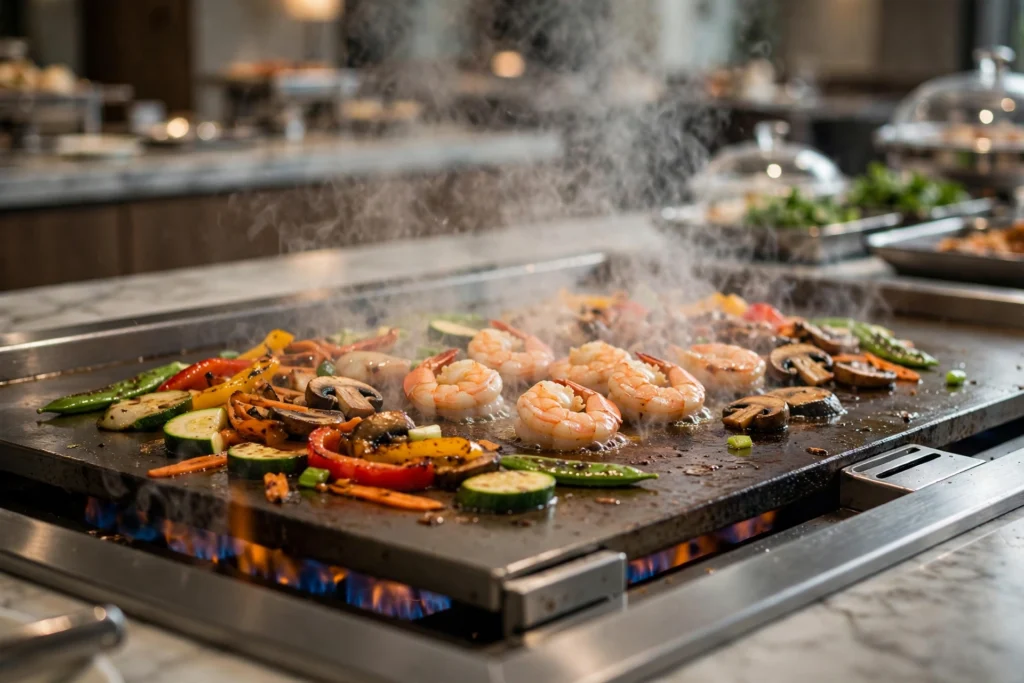
- Made-to-order elements — hibachi, pho, sushi made fresh signal investment in quality
- Cleanliness as a religion — in the review era, one viral photo of a dirty line can kill a location
- Fair, transparent pricing — the lunch vs dinner tiers make sense and the value is obvious
If your local buffet checks these boxes, it’s probably not going anywhere.
The Bottom Line
So, are buffets dying? The lazy ones are — and that’s fine. What’s emerging is leaner, more specialized, and frankly better: buffets that earn their existence through freshness, identity, and honest value rather than inertia. The all-you-can-eat format survived the pandemic, inflation, and the delivery-app revolution. It’s not dying. It’s growing up.
Frequently Asked Questions
Are buffets dying in 2026? No — but they’re changing. Legacy chains continue closing weaker locations while consumer demand surges (Yelp reported a 252% jump in “all you can eat buffet near me” searches). The trend favors specialized, well-executed buffets over generic ones.
Why are so many buffets closing? Rising food and labor costs hit the fixed-price unlimited model hardest, and undifferentiated buffets competing only on price can’t sustain quality. Delivery apps and changing tastes add pressure. Closures concentrate among operators that didn’t adapt.
What kind of buffets are growing? Specialty formats — Korean BBQ, hot pot, all-you-can-eat sushi and dim sum — are driving the revival, along with well-run family buffets offering genuine value and premium experience-based spreads.
Is the all-you-can-eat model still good value? Yes, when the buffet executes well. Against 2026 restaurant prices, a flat-price unlimited meal remains one of the best values for families and groups — especially if you eat strategically and choose lunch over dinner.