
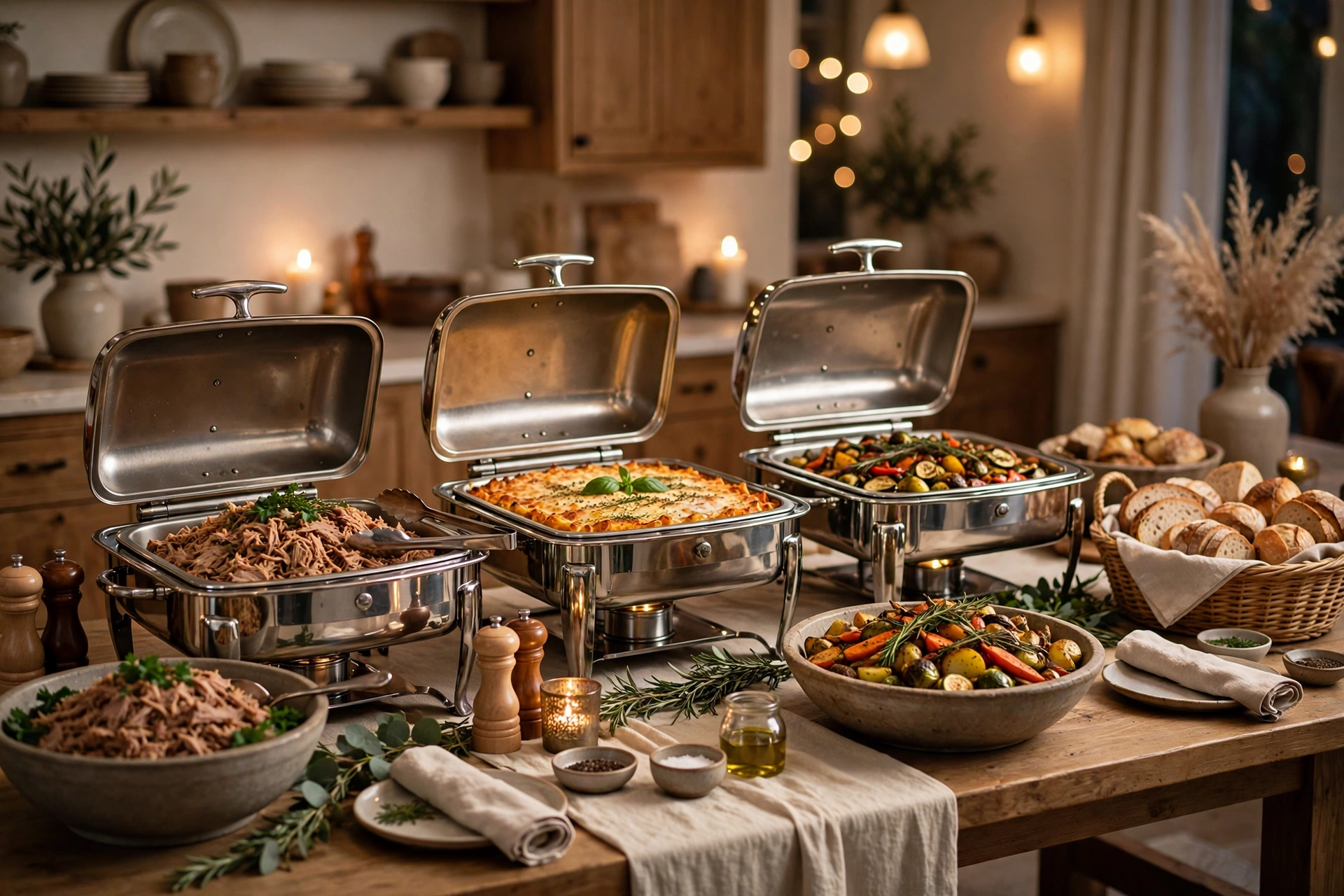
How to Host a Buffet-Style Dinner Party at Home
Learning how to host a buffet style dinner at home is one of the highest-leverage entertaining skills you can pick up. A buffet format lets you feed 12, 20, even 30 guests without plating a single dish, keeps you out of the kitchen during the party, and handles mixed dietary needs gracefully. But a bad home buffet — long lines, cold food, chaotic flow — is worse than no party at all.
This guide covers everything: planning the menu for a crowd, setting up the table for smooth flow, the food-safety basics borrowed from professional buffets, and a quantities cheat sheet so you buy the right amount.
Planning the Menu for a Crowd
The golden rule: fewer dishes, bigger batches
The #1 mistake home hosts make is cooking twelve different things. For a crowd, 4–6 dishes done well beats a sprawling spread. Each additional dish multiplies your prep, your servingware needs, and your stress.
A foolproof menu formula
Build your menu on this template:
- One substantial main (the anchor) — pulled pork, baked ziti, chicken curry, chili, or a big tray of lasagna. Something that feeds many, holds well, and reheats gracefully.
- One secondary protein or hearty vegetarian option — so nobody’s stuck. A big tray of roasted vegetables, a bean-based dish, or a simple second meat.
- Two sides — one starch (rice, rolls, mashed potatoes) and one vegetable or salad.
- One bread/roll basket — cheap, filling, universally loved.
- One or two desserts — store-bought is completely fine. Nobody judges the host who bought the pie.
Choose foods that hold well
Professional buffets hold food with steam tables and chafing dishes — and you should steal their playbook by choosing dishes that tolerate holding: braises, stews, curries, baked pastas, pulled meats, rice dishes, roasted vegetables. Avoid foods that die on a buffet table: delicate fish, crispy fried anything, dressed salads (serve dressing on the side), and soufflés.
The make-ahead strategy
A calm host is a good host. Structure your prep:
- 2 days before: shop, make anything that improves with time (chili, curry, braised meats, desserts)
- 1 day before: prep vegetables, make salads (undressed), set the table, arrange serving dishes with sticky notes marking what goes where
- Day of: cook the fresh items, reheat the made-ahead dishes, set out the buffet 15–20 minutes before guests arrive
Setting Up the Table: Flow Is Everything
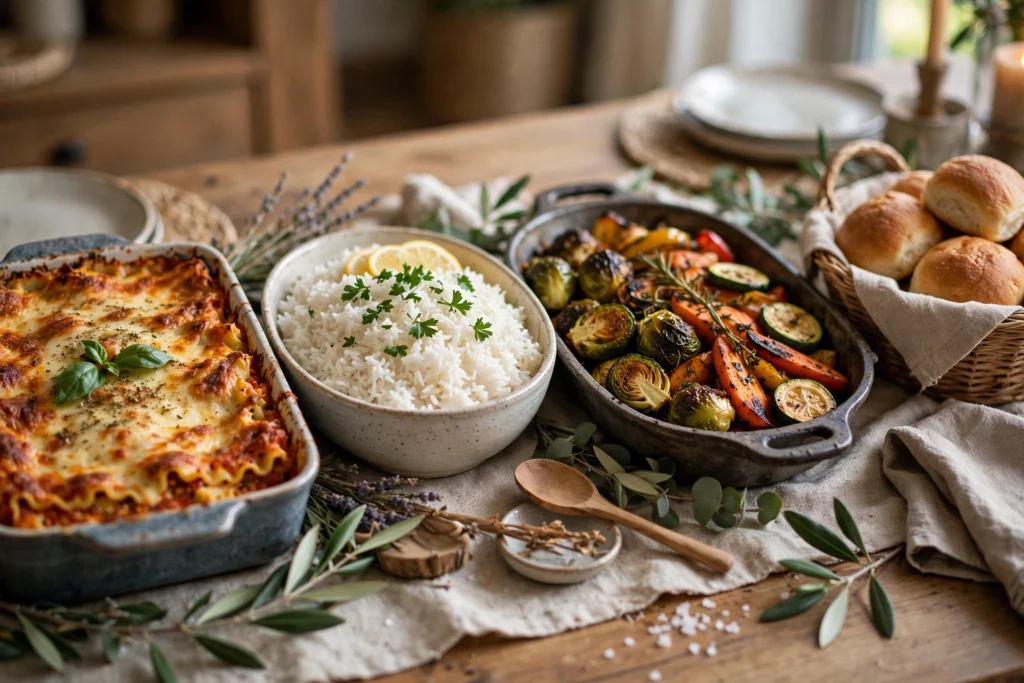
Bad flow creates lines; good flow makes 25 people serve themselves in minutes. Here’s the professional layout:
The line order
Arrange the table in the order people eat:
- Plates first — at the very start of the line. (Running out of plates mid-line is a classic failure; put out more than you think you need.)
- Mains and hot sides — the substantial food
- Salads and cold items — after the hot food
- Bread and condiments
- Utensils and napkins LAST — this is the pro move. If guests pick up cutlery first, they’re juggling it while serving themselves. Utensils at the end means one clean handoff.
- Drinks on a separate table — never in the food line. A drink station elsewhere prevents bottlenecks and spills over the food.
The two-sided trick
If your table is freestanding (not against a wall), let guests serve from both sides. It literally doubles your throughput. Put the most popular dish in the middle so both sides reach it.
For big crowds: split the stations
Over ~20 guests, consider splitting into two tables: hot food on one, cold food/salads/desserts on another. It breaks one long line into two shorter ones and keeps traffic moving. Desserts can even come out later — clearing the mains and revealing dessert feels like a second event.
Label everything
Small tent cards naming each dish (and flagging common allergens or “vegetarian” / “contains nuts”) cost almost nothing and save you answering the same question forty times. This is also just good hosting for guests with dietary restrictions.
Food Safety Basics at Home
Restaurants follow strict holding rules, and your home buffet should too — scaled down:
- The two-hour rule: perishable food shouldn’t sit at room temperature for more than two hours (one hour if it’s hot outside). Plan your timing around this.
- Keep hot foods hot: use chafing dishes with canned fuel, slow cookers on “warm,” or warming trays. Keep backup batches in a 200–250°F oven and refill in small amounts rather than putting everything out at once.
- Keep cold foods cold: nest serving bowls in larger bowls of ice for salads, shrimp, and dairy-based dishes.
- Small batches, frequent refills: this is the single most impactful food-safety and quality habit. A half-tray refilled fresh beats a full tray sitting out.
- Separate utensils per dish — and a polite sign or mention discouraging double-dipping.
- When in doubt, throw it out. Food that’s sat out too long isn’t worth the risk.
The Quantities Cheat Sheet (Estimates)
The eternal question: how much food for how many people? These are planning estimates for a buffet where guests serve themselves — round up if your crowd eats heartily or the event runs long:
Dish type | Per guest (estimate) | For 20 guests
Main protein (pulled pork, chicken, etc.) | 4–6 oz cooked | 6–8 lbs
Starch side (rice, potatoes, pasta) | 4 oz | ~5 lbs dry rice / 5 lbs potatoes
Vegetable side or salad | 3–4 oz | 4–5 lbs
Rolls/bread | 1–2 per person | 30–40 rolls
Dessert | 1–2 servings per person | Plan for 30 servings
Drinks (non-alcoholic) | ~3 servings per person | ~60 servings
General rules of thumb:
- Total food: plan roughly 1–1.25 lbs of food per person for a dinner buffet
- Variety math: more dishes = smaller quantities of each. With 6 dishes, lean toward the low end per dish.
- The 10% buffer: round everything up ~10% for unexpectedly hungry guests and seconds. Running out is the only unforgivable sin.
Drinks: Keep It Simple
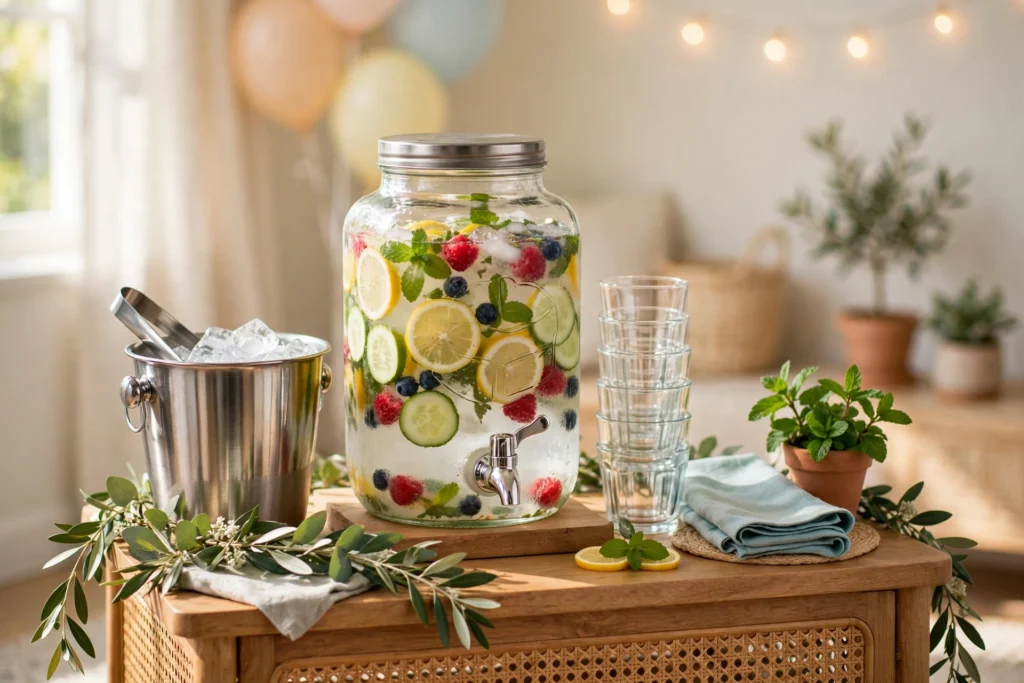
Don’t build a full bar unless you want to. The low-stress formula: one signature drink (a punch or batch cocktail) + water + one or two non-alcoholic options, plus a red, a white, and a basic beer if that suits your crowd. Buy double the ice you think you need, and set the drink station away from the food line with its own cups, napkins, and a trash bin nearby.
Day-Of Timeline
- 20 minutes before: transfer hot food to chafing dishes/warmers; put cold items on ice
- Guests arrive: greet, point to the food and drinks, then stop fussing
- 90 minutes in: refill from oven backups; clear empty dishes
- Dessert: bring it out when mains wind down — it re-energizes the party
The Bottom Line
A great home buffet comes down to five things: a simple menu of foods that hold well, a table laid out for flow (plates first, utensils last, drinks separate), hot food kept hot and cold food kept cold, realistic quantities with a buffer, and a host who’s present instead of trapped in the kitchen.
And if all of this sounds like work you’d rather skip? There’s always the original inspiration: gather everyone at an actual buffet. Our large group dining guide covers how to do that well.
Frequently Asked Questions
How much food do I need for a buffet-style dinner party? Plan roughly 1–1.25 lbs of total food per adult guest, with about 4–6 oz of main protein per person. Round up ~10% as a buffer. See the quantities cheat sheet above for a per-dish breakdown.
How do you keep food warm at a home buffet? Use chafing dishes with canned fuel, slow cookers on warm, or warming trays. Keep backup batches in a 200–250°F oven and refill in small amounts. Hot food must stay at 140°F or above.
How long can food sit out at a home buffet? Two hours maximum at room temperature for perishable foods (one hour in hot weather).
What are the best foods for a home buffet? Dishes that hold well: braised meats, pulled pork, chili, curry, baked pasta, rice dishes, roasted vegetables. Avoid crispy fried foods, delicate fish, and pre-dressed salads.


