
Buffet vs. Plated Catering: Which Is Right for Your Event?
One of the first big decisions in event planning — weddings, corporate gatherings, milestone birthdays, holiday parties — is how the food gets to the guests. The buffet vs. plated catering debate isn’t really about which is “better.” It’s about which fits your budget, your guest list, your venue, and the atmosphere you want. Here’s an honest, detailed comparison to help you decide.
The Core Difference
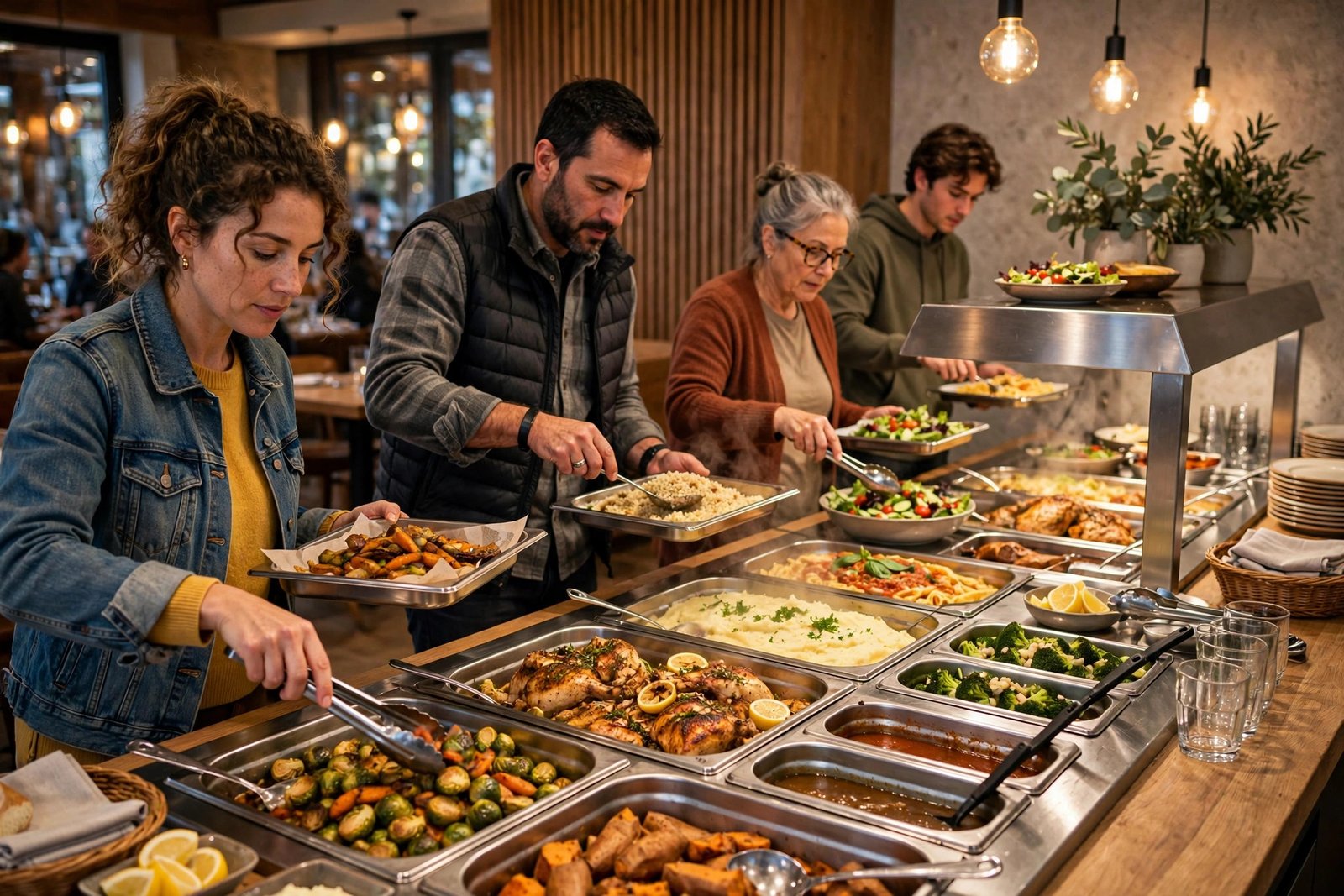
- Buffet catering: Food is displayed on stations; guests serve themselves, choosing what and how much to eat. Staff focus on setup, replenishment, and clearing.
- Plated catering: Each course is portioned in the kitchen and served to seated guests by waitstaff, on a coordinated timeline.
Everything else — cost, vibe, logistics — flows from that distinction.
Cost Comparison
This is where most planners start, and the gap is real:
Buffet catering typically costs 30–50% less per head than plated service for a comparable menu. The savings come from staffing: a buffet for 100 guests might need 4–6 staff, while plated service for the same group needs 10–15 (servers, bussers, captains, kitchen expeditors). Fewer labor hours = lower bill.
Typical 2026 US price ranges (vary widely by market — always get local quotes):
| Service style | Per-person range (mid-market) |
|---|---|
| Buffet catering | ~$25–$60 |
| Plated catering | ~$45–$110+ |
| Family-style (hybrid) | ~$35–$75 |
The gap narrows for very small events (under 30 guests), where the fixed costs of buffet equipment and setup eat into the savings. And premium buffet presentations — live cooking stations, raw bars, carving stations — can cost as much as plated service. But apples to apples, buffet wins on price.
Guest Experience: The Trade-Offs
Buffet catering pros
- Choice and control. Guests eat what they want, in the portions they want. Picky eaters, dieters, and adventurous eaters all self-accommodate — no RSVP meal-selection cards needed.
- Dietary flexibility. Vegetarian, vegan, gluten-free, and allergy-sensitive guests navigate a well-labeled buffet far more easily than a fixed plated menu. (Labeling matters — see our dietary options guide for how good buffets handle this.)
- Mingling. Guests move, chat in line, and mix beyond their table — great for networking events, reunions, and celebrations where social energy matters.
- Seconds. Nobody goes home hungry, and nobody’s stuck with a tiny portion of something they loved.
- Faster overall service for large groups. A well-designed buffet with dual-sided lines can feed 200 people in 30 minutes; plated service for 200 takes 60–90 minutes of coordinated courses.
Buffet catering cons
- Lines. The unavoidable downside. Poorly planned buffets create bottlenecks; even good ones require guests to wait their table’s turn.
- Less formal. Self-service reads casual. For black-tie weddings or executive galas, it can feel off-brief (though upscale “station-style” buffets with chef attendants bridge this gap elegantly).
- Pacing. Guests eat at different speeds, which complicates speeches, toasts, and program timing.
- Plate waste. Self-servers overfill; expect more food waste than precisely portioned plated meals.
- Logistics. Buffets need significant floor space for stations plus queue lanes — a real constraint in smaller venues.
Plated catering pros
- Elegance and control. Uniform, beautiful plates arriving simultaneously is the most polished dining experience available.
- Program-friendly. Courses arrive on schedule, so speeches, first dances, and presentations slot in cleanly.
- Portion precision. Less waste, predictable food costs, and every guest gets the intended dish.
- Guest comfort. Elderly guests, guests with mobility issues, and anyone who dislikes carrying plates stays seated and served.
Plated catering cons
- Cost. The staffing premium is substantial, especially beyond 100 guests.
- Limited choice. Typically 2–3 entrée options chosen months ahead via RSVP cards — a logistical headache and a gamble on guest preferences.
- Dietary rigidity. Special meals must be pre-ordered and tracked to seats; mistakes happen under pressure.
- Slower for big crowds. Each course multiplies service time; a three-course plated dinner for 250 can run two hours.
Which Events Suit Which Style?
Choose buffet when: the event is casual to semi-formal; the guest list is large (75+); guests have diverse ages, tastes, or dietary needs; mingling matters more than ceremony; or budget is the binding constraint. Corporate lunches, family reunions, graduation parties, holiday office parties, and casual weddings all thrive on buffets.
Choose plated when: formality is the point (black-tie weddings, galas, awards dinners); the guest count is moderate (under ~120, where staffing costs stay sane); the program needs tight timing; or many guests have mobility limitations.
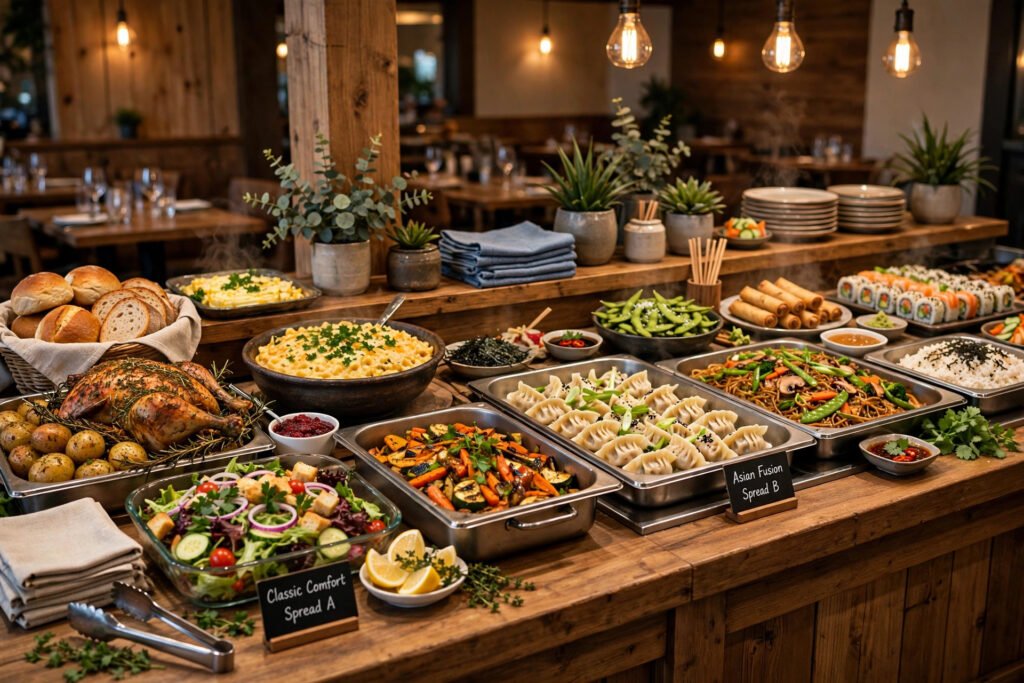
Consider the hybrids: Family-style (platters on each table, guests pass and serve themselves) splits the difference — more elegant than a buffet line, more flexible than plating, moderate cost. Station-style (multiple themed food stations, chef-attended) is the upscale evolution of the buffet: guests graze and mingle, but everything feels intentional and premium.
Practical Planning Tips for Buffet Catering
If you go buffet, these details separate smooth events from chaotic ones:
- Dual-sided lines — set up stations accessible from both sides to double throughput.
- Dismiss tables in waves — have the DJ or coordinator release 2–3 tables at a time to prevent a 100-person line.
- Separate the bar from the food — drink lines and food lines in the same space create gridlock.
- Label everything — dish names plus major allergens (nuts, dairy, gluten). Your guests with restrictions will thank you.
- Plan for 10–15% extra — buffets need buffer; running out of food mid-event is the cardinal sin.
- Dessert as a separate station — ideally revealed later in the evening; it creates a second “moment” and prevents the dessert table from clogging the main line.
And if you’re attending rather than hosting, the same buffet etiquette applies at catered events — arguably more so, since the host is paying per head.
The Waste Question
Plated service wastes less food per guest (precise portions), but buffet waste is manageable with good planning: accurate headcounts, smaller replenishment batches, and donation programs for untouched surplus (many caterers now partner with food-rescue organizations — ask yours). If sustainability matters to your event, put the waste plan in the catering contract, whichever style you choose. For context on how restaurants handle surplus generally, see what happens to leftover buffet food.
FAQ
Is buffet catering cheaper than plated?
Yes — typically 30–50% cheaper per person for a comparable menu, because buffets need far fewer service staff. The savings are largest for groups over 75; for very small events the gap narrows.
How many staff do you need for buffet catering?
A rough rule: 1 staff member per 20–25 guests for a standard buffet (setup, replenishment, clearing, drinks). Plated service needs roughly 1 server per 10–15 guests plus kitchen and captain staff. Always confirm staffing in the catering quote.
Is a buffet OK for a wedding?
Absolutely — buffet weddings are increasingly popular and can feel abundant and celebratory. For a more elevated feel, choose station-style service with chef attendants, quality rentals, and thoughtful décor. Reserve plated service for formal/black-tie weddings.
How do you avoid long lines at a buffet event?
Use dual-sided serving lines, dismiss tables in waves (2–3 at a time), keep the bar separate from food stations, and for 150+ guests consider two separate buffet stations in different parts of the room.


