
Is Buffet Sushi Safe? How to Judge Quality Before You Eat It
Few buffet sights spark as much debate as the sushi bar. Rows of colorful rolls look inviting — but sushi is raw or lightly cooked fish held at serving temperature, which makes it one of the riskiest items on any buffet line. So is buffet sushi safe? The honest answer: sometimes yes, sometimes absolutely not. What matters is knowing how to tell the difference in about 60 seconds.
Why Sushi Is the Riskiest Item on the Line
Most buffet foods are cooked and held hot (above 140°F / 60°C), which keeps bacteria in check. Sushi breaks that safety net in three ways:
- Raw fish has no cooking step. Cooking kills pathogens; raw fish relies entirely on sourcing, handling, and cold-chain discipline.
- It must stay cold, not hot. Sushi is safe only when held at or below 41°F (5°C). The “danger zone” between 41°F and 140°F is where bacteria multiply fast.
- Every diner touches the setup. Tongs, serving utensils, and sneeze guards are shared by hundreds of people whose hand hygiene you can’t verify.
Food safety experts consistently rank buffet sushi among the top items to approach with caution, alongside raw sprouts and lukewarm carving stations. That doesn’t mean never — it means never blindly. If you’re unsure about any buffet’s safety practices generally, our guide to how seafood buffets stack up on value covers the broader picture.
The 60-Second Sushi Bar Safety Check
Before you take a single piece, run this inspection. If the bar fails two or more of these, walk away.
1. Is it actually cold? Hover your hand over the sushi display (don’t touch the food). You should feel a distinct chill. Refrigerated display cases with glass covers are the gold standard. Sushi sitting on a room-temperature platter or a lukewarm tray is an instant no.
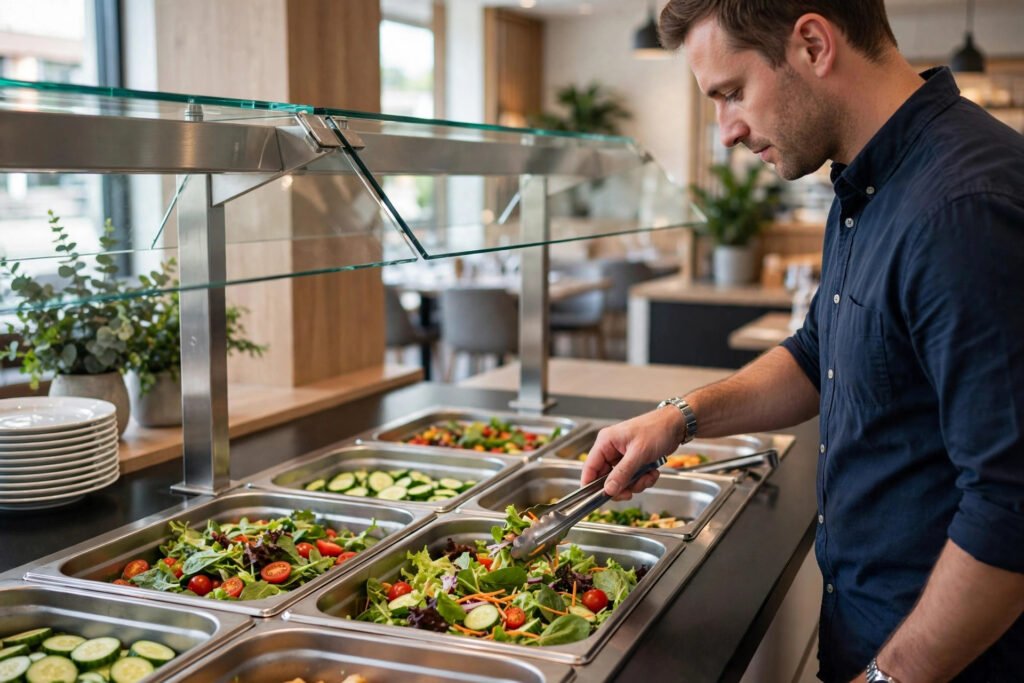
2. Is there a sneeze guard? An uncovered sushi display that dozens of people lean over is a hard pass. The guard should cover the food between you and other diners.
3. Does the rice look fresh? Sushi rice dries out visibly. Rice that looks glossy and plump was made recently; rice that’s hard, cracked, or crusty has been sitting for hours. Old rice means old fish.
4. Is the fish vibrant? Fresh tuna is a rich red, salmon a clean coral-pink. Fish that’s dull, graying, brownish at the edges, or smelling “fishy” (fresh fish smells like the ocean, not like fish) has turned.
5. Is the tray nearly empty or overstuffed? Both are warning signs. A nearly empty tray sitting out suggests long exposure; a tray piled deep suggests the kitchen is prioritizing appearance over temperature control. The safest setups use smaller batches refilled frequently.
6. Are utensils clean and dedicated? Each sushi variety should have its own tongs or chopsticks, and they shouldn’t be lying in the food. Handles dunked into the tray are a contamination red flag.
7. How busy is the place? High turnover is the buffet sushi’s best friend. A packed restaurant at dinner rush refills sushi every 15–20 minutes. A dead-empty buffet at 3 PM is serving you the lunch leftovers.
Which Sushi Is Safest at a Buffet?
Not all sushi carries equal risk. If you decide the bar passes inspection, choose in this order:
- Safest: cooked rolls. California rolls (imitation crab), shrimp tempura rolls, cooked eel (unagi), and tamago (egg) rolls. The cooking step eliminates most pathogens.
- Moderate: nigiri and sashimi at busy, high-end buffets. Raw fish at a reputable, high-turnover sushi buffet can be fine — the dedicated sushi buffet concept exists precisely because these places move volume.
- Riskiest: raw rolls at a general buffet. A Chinese or American buffet’s sushi corner is usually an afterthought — pre-made, delivered, and sitting longest. This is where most food-safety warnings are aimed.
- Skip entirely: anything with raw oysters or ceviche-style preparations on a self-serve line unless the restaurant is specifically known for them.
A useful rule of thumb: if sushi is the restaurant’s specialty (a sushi buffet), the cold chain is probably managed. If sushi is a side attraction at a general buffet, treat it with maximum skepticism.
The Temperature Rule You Should Actually Remember
Memorize this one number pair: cold food below 41°F, hot food above 140°F. Perishable food sitting between those temperatures for more than 2 hours (1 hour if the room is above 90°F) should be discarded — that’s the FDA’s guidance, and it’s the standard every buffet is supposed to follow. You can’t measure the temperature with your eyes, but you can use the “feel test”: sushi that doesn’t feel distinctly cold to the hovering hand isn’t safe, period.
What If You Already Ate It?
Don’t panic — most buffet sushi, even mediocre sushi, doesn’t cause illness; the risk is elevated, not guaranteed. Watch for symptoms (nausea, vomiting, diarrhea, cramps) in the 6–72 hours after eating. Most foodborne illness resolves on its own, but seek medical care for bloody stool, high fever, dehydration, or symptoms lasting more than 3 days. And remember which buffet it was — if you got sick, reporting it to the local health department helps protect the next diner.
Curious about what happens to buffet food that doesn’t get eaten? Our piece on what happens to leftover buffet food explains why sushi, in particular, almost never survives to a second service.
Smart Sushi Buffet Strategy
If you love sushi and want the buffet experience:
- Go at peak hours — Friday and Saturday dinner, when turnover is fastest.
- Ask staff when the sushi was put out. A confident, specific answer (“about 20 minutes ago”) is a great sign. A shrug is not.
- Start with cooked rolls, then try raw pieces only if everything checks out.
- Eat it promptly. Don’t build a mountain of sushi and let it warm up at your table for 40 minutes.
- Wash or sanitize your hands after handling shared utensils and before eating.
For a health-conscious approach to the rest of the line, see our guide to eating healthy at a buffet.
FAQ
Is it safe to eat sushi at a buffet?
It can be, if the buffet keeps sushi properly refrigerated (below 41°F), uses a sneeze guard, has high turnover, and the fish looks and smells fresh. Sushi at a dedicated sushi buffet during peak hours is much safer than a sushi corner at a quiet general buffet.
What are the signs of bad sushi at a buffet?
Dull or discolored fish, a strong fishy smell, dried or cracked rice, warm-to-the-touch display, no sneeze guard, dirty or shared utensils, and a nearly empty restaurant (low turnover). Any two of these mean you should skip it.
Which buffet sushi is the safest choice?
Cooked rolls — California rolls, shrimp tempura rolls, unagi (cooked eel), and tamago — are the safest because the cooking step kills most pathogens. Raw nigiri and sashimi carry more risk and should only be eaten at high-turnover, well-managed sushi bars.
How long can sushi sit out at a buffet?
Per FDA food-safety guidance, perishable food should not sit in the temperature danger zone (41°F–140°F) for more than 2 hours — 1 hour in hot conditions. Sushi held properly cold in a refrigerated display is fine; sushi on an unchilled platter is not.


