What Happens to Leftover Buffet Food? The Truth
Every buffet diner has wondered it. You look at the trays of food — far more than anyone could eat — and think: what happens to all of this when the night is over?
The honest answer is complicated. Some of it is thrown away. Some finds a second life. And the rules about what happens to leftover buffet food are stricter than most people expect. Here is the full truth.
The Short Answer: Health Codes Decide
If you take one thing from this article, let it be this: what happens to leftover buffet food is not really the restaurant’s choice. Health codes make the decision.
Once food has been served on a public buffet line — where guests breathe over it, touch the serving utensils, and stand inches away — it is legally considered exposed. In most places, exposed food cannot be served to another guest, donated, or put back in the kitchen for the next day. The law treats it as a health risk, and restaurants must follow the law.
That does not mean everything goes in the trash. But it does mean the options are narrower than most people imagine.
Why Buffets Can’t Re-Serve Leftover Food
It feels wasteful to throw away a tray of untouched-looking food. But there are solid reasons behind the rule.
The 2-Hour Food-Safety Rule
Food safety experts divide temperatures into a “danger zone” — roughly between 40°F and 140°F (4°C to 60°C) — where bacteria multiply fast. Perishable food should not sit in that zone for more than two hours. After that, reheating may kill some bacteria but will not remove the toxins some of them leave behind.
Buffet trays sit out for hours at warm, not hot, temperatures. Even food that looks perfect may have been in the danger zone too long. No responsible kitchen will gamble with that, because the result could be dozens of sick customers.
Cross-Contamination and Liability
A buffet line is a shared space. Guests touch the same serving spoons, lean over the trays, and sometimes — despite the rules — touch the food itself. Once food has been on that line, the kitchen can no longer guarantee what has touched it.
Re-serving it would mean taking on an unknown risk. If even one guest got sick, the restaurant could face lawsuits, fines, and the loss of its reputation. No tray of leftover pasta is worth that. This is also why good buffet etiquette matters — the cleaner the line stays, the less has to be thrown away.
Where Does Uneaten Buffet Food Actually Go?
So if it cannot be re-served, where does it end up? Here are the real destinations, from most to least common.
The Trash — The Most Common Destination
Let us be honest: most leftover buffet food goes into the garbage. Estimates vary, but some industry reports suggest a large share of the food put out at buffet-style service ends up wasted, with much of it going to landfill. It is the sad, simple reality of the business.
This is the part of the answer nobody likes. But understanding it is the first step toward the better practices below — and toward diners wasting less in the first place.
Composting and Food-Waste Programs
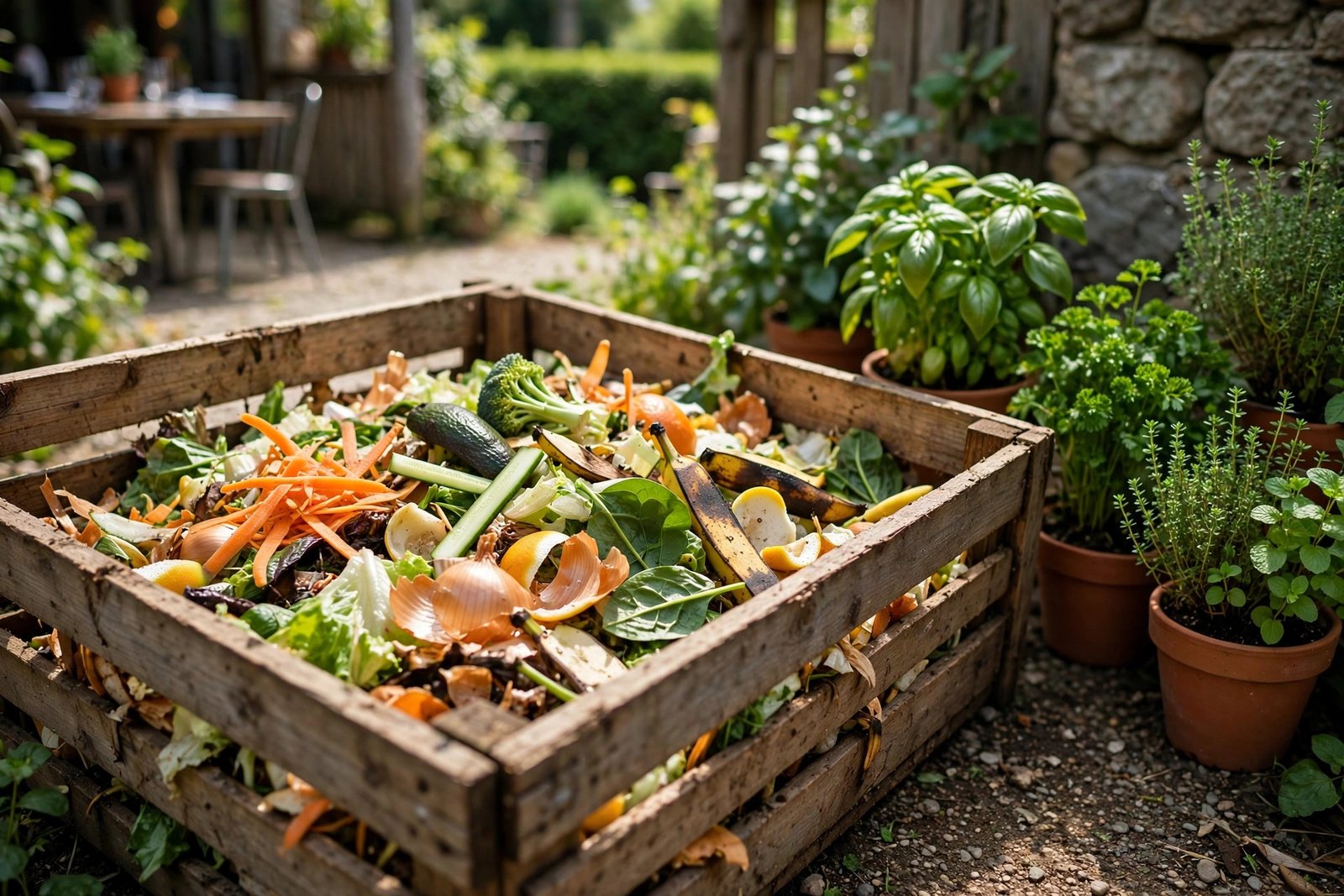
A growing number of restaurants send food scraps to composting programs instead of landfills. The waste is collected, broken down, and turned into compost for farms and gardens. It is not perfect — the food is still wasted — but it keeps it out of landfills, where rotting food releases methane, a powerful greenhouse gas.
Composting is still the exception rather than the rule, mainly because it depends on local services being available and affordable. But it is growing every year.
Donation — Rare, But Growing
Can buffets donate leftover food to shelters or food banks? Sometimes — but with a big catch. Health codes in most places only allow donation of food that was never put on the public line. That means surplus food still in the kitchen, held at safe temperatures, and never touched by guests.
Some restaurants also work with apps that sell surplus food at a discount near closing time. These programs are a win for everyone: less waste, cheaper meals, and new customers. They are still uncommon at traditional buffets, but the idea is spreading.
Animal Feed and Other Uses — In Some Regions
In certain areas, food scraps from restaurants are collected, treated, and used as animal feed — most famously on pig farms. Las Vegas has a long history of this practice. It is heavily regulated: the scraps must be cleaned and heat-treated to kill pathogens before animals can eat them.
Other creative uses exist too, from converting cooking oil into biodiesel to sending scraps to facilities that turn waste into energy. These are niche solutions, but they show how much thought goes into the problem.
How Buffets Reduce Waste Behind the Scenes
Good buffet operators hate waste as much as you do — every tray thrown away is money lost. Here is what smart kitchens do to keep waste down.
Smaller Pans With Frequent Refills
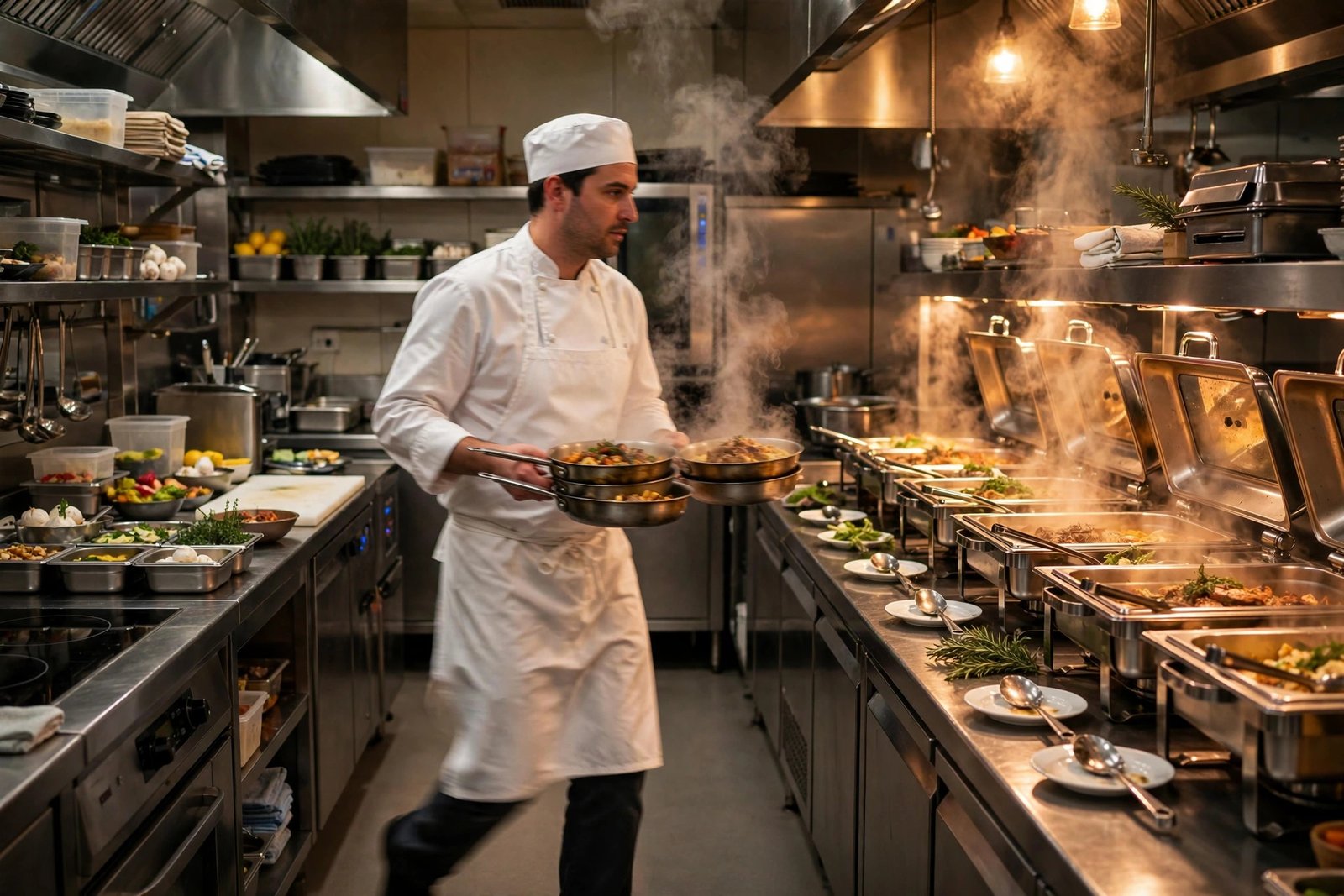
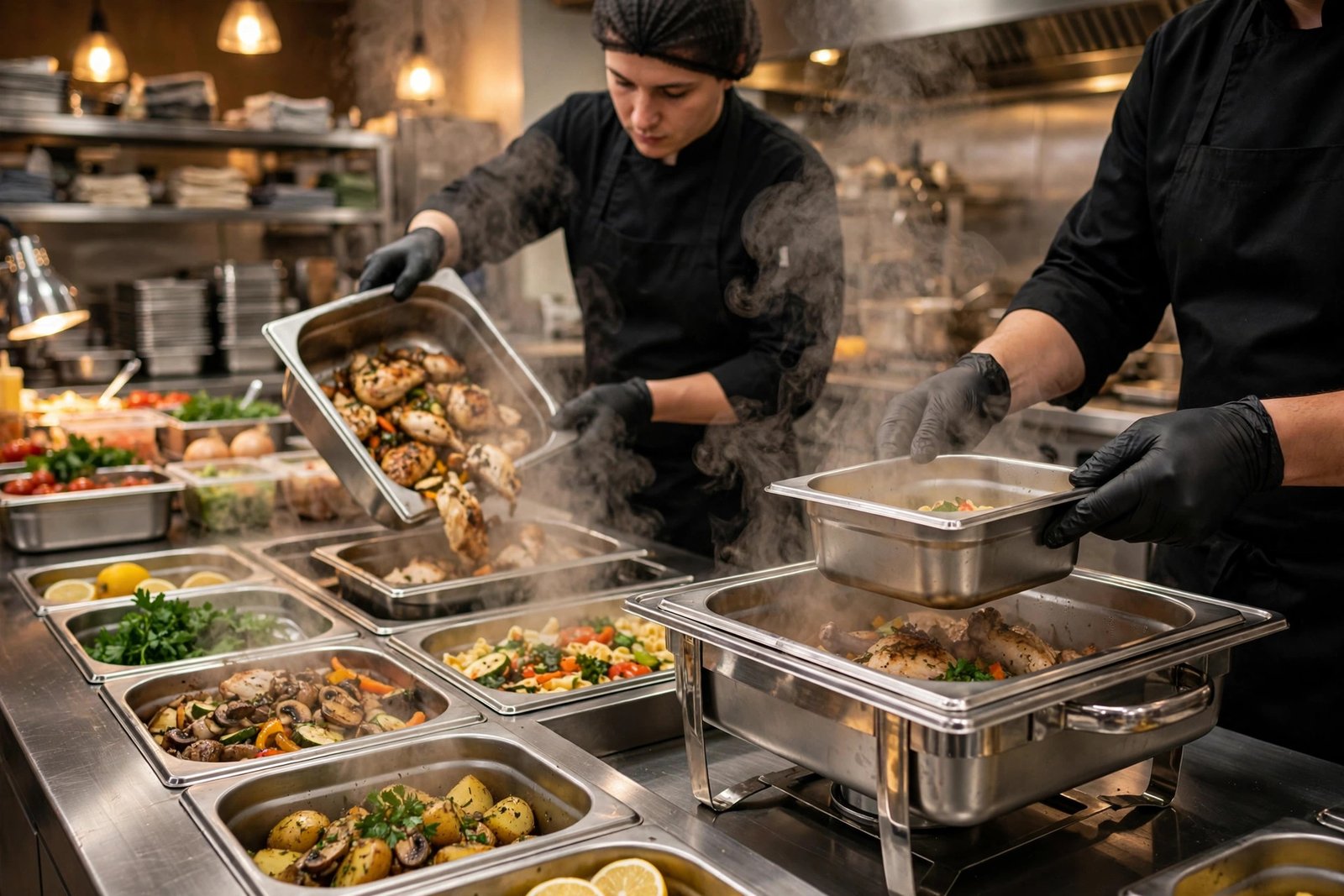
The best trick in the business is simple: put out less food at a time. Instead of one giant tray of chicken that sits for two hours, the kitchen sends out small pans and refills them often. The food stays fresher and hotter, guests get a better meal, and at closing time there is far less left to throw away.
If you notice a buffet refilling often with small batches, that is a sign of a well-run kitchen — not a cheap one.
Tracking What Gets Eaten
Experienced kitchen managers watch the line closely. They learn which dishes disappear and which ones sit untouched. Over time, they adjust: popular dishes get bigger batches, unpopular ones get smaller batches or get replaced.
Some larger operations even track waste by weight, weighing what comes back from the line each night. The data tells them exactly where to cut back, which saves money and reduces waste at the same time.
Adjusting Cooking Toward the End of Service
As closing time approaches, smart kitchens slow down production. They cook smaller batches, stop refilling slow-moving dishes, and let the line naturally wind down. The goal is to hit closing time with nearly empty trays.
This is also why arriving in the last 30 minutes can mean a thinner selection — the kitchen is deliberately avoiding waste. It is one of our top tips for getting your money’s worth: come earlier for the fullest, freshest spread.
What Diners Can Do to Help Reduce Buffet Waste
Restaurants do their part, but diners have real power too. The single biggest source of buffet waste is not the line — it is the plate. Food left on your plate cannot be saved or given to anyone. It is pure waste.
Here is how to help:
- Take small portions and go back for more. You can always make another trip. You cannot un-serve a mountain of food.
- Try new dishes in tiny tastes first. A spoonful tells you if you like it. A full scoop of something you hate is garbage.
- Help kids take small amounts too. Children are the biggest over-servers at any buffet — our family dining guide has more on buffet visits with kids and dietary needs.
- Do not feel guilty about going back. Multiple small trips waste far less than one overloaded plate.
If every diner wasted just a little less, the trash bags at closing time would be dramatically smaller.
What Happens to Leftover Buffet Food? Your Questions Answered
Do buffets throw away all leftover food?
Most food that sat on the public line is discarded — health codes require it. Food that never left the kitchen may be composted, donated where legal, or repurposed safely. The key question is whether guests could have touched it.
Can you take leftover buffet food home?
No. Buffet pricing covers what you eat in the restaurant, and health codes do not allow restaurants to pack up line food for guests. Ask about takeout options, which are prepared separately in the kitchen.
Is food donation from buffets legal?
It depends on the food and the location. Many places protect restaurants that donate safe, unserved food — but food from a public buffet line almost never qualifies. Donation usually only works for surplus food still in the kitchen that guests never touched.
Why can’t buffets just re-serve untouched-looking food?
Because “looks fine” is not a food-safety standard. Once food has sat on a public line, the kitchen cannot verify its temperature history or rule out contamination. Health codes require it to be discarded, and the liability of getting it wrong is enormous.
The Bottom Line
What happens to leftover buffet food is decided by health codes first and creativity second. Most line food is discarded for safety, but composting, donation of unserved surplus, and smarter kitchen practices are slowly shrinking the waste.
The good news? You are part of the solution. Take what you will eat, go back for more when you want it, and leave the mountain-building behind. Less waste on your plate means less waste in the bin — and a better buffet for everyone.